
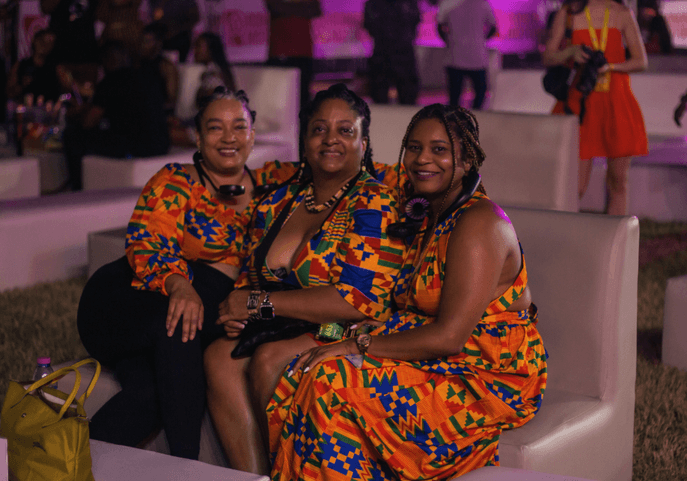
When you're packing for a Ghana trip, the question isn't just "what will I need." It's "what will I wear, and what will it say."
What you wear becomes part of how you show up, and how Ghana welcomes you back. Preparing for what to wear in Ghana is one key part of planning for a memorable trip.
This guide gives you the context for dressing in Ghana so you can dress with confidence. You will learn how to dress for comfort in the heat, respectful in the moments that call for it, and free to enjoy the color and the creativity that Ghanaian fashion is known for.
Dressing for Ghana's Climate and Everyday Culture
Ghana sits close to the equator, so heat and humidity are a constant, whether you're visiting Accra, Kumasi, or the coast near Cape Coast. Days are warm year-round, typically in the high 80s to low 90s Fahrenheit, and humidity can make it feel warmer still. Evenings cool slightly, especially near the ocean, but you won't need heavy layers at any point during a visit.
Fabrics to go for
Lightweight, breathable fabrics are your best friend. Cotton, linen, and light rayon blends move with you and dry quickly if you get caught in a sudden rain shower (common during the rainy seasons, roughly April to June and September to November).
Loose-fitting clothing works better than anything tight or structured; you'll be walking on uneven ground, riding in taxis without much air conditioning, and moving through markets where a little breathing room goes a long way.
Everyday Wear
For everyday wear around Accra, Ghanaians dress often more put-together than casual American streetwear. Jeans, sundresses, blouses, and button-downs are all common. Shorts are fine in tourist areas and at the beach, but many locals opt for looser trousers or skirts even in casual settings, especially outside of Accra's more cosmopolitan neighborhoods.
If you're heading to government offices, churches, or more traditional family settings, cover your shoulders and knees to be safe, you can always dress down later.
Footwear
Footwear matters more than people expect. Sidewalks are inconsistent, red dust is real, and you'll do a surprising amount of walking on trips that include markets, historic sites, and family visits. Comfortable sandals or closed-toe shoes with real support will serve you better than anything you'd wear to a rooftop bar back home. Save the heels and dress shoes for evenings out.
What to Wear to a Naming Ceremony (The Meaning Behind White)

Door of return| Travelers dressed in white
If your trip includes a naming ceremony, you'll notice white is everywhere. It isn't decoration. White cloth traditionally represents purity, joy, and the innocence of new life, and it's worn by the family and close guests to mark the occasion as one of celebration and blessing, not just family logistics.
If you're attending as a guest, white or cream clothing is a respectful and welcome choice, though it isn't always mandatory. Guests dressing in white is a way of visually joining in that spirit of new beginnings.
Also, if you are attending as a participant, to learn ands receive your new Ghanaian name, white is usually recommended. It is not mandatory but most diasporans go with with due to its symbolism. Check with your host if you're unsure, since customs vary by ethnic group and by family.
Beyond the color, dress modestly and comfortably. These ceremonies often run for a couple of hours, include standing, sitting on the ground or low stools, and moving between an outdoor courtyard and indoor space. A white dress, matching two-piece outfit, or white kaftan works well for most guests. Men often wear white shirts with trousers, or a simple white kaftan. It's a joyful, unhurried occasion hence dress like you're there to celebrate, not to rush off somewhere else.
Read more about what happen at a Ghanaian Naming ceremony in this blog
Kente and Adinkra: Wearing Symbols with Meaning, Not Just Style
Kente cloth and adinkra symbols are two of Ghana's most recognized textile traditions, and both carry more meaning than most visitors realize.
Kente originated with the Akan people, particularly the Ashanti and Ewe, and was historically woven for royalty and special occasions. Each pattern and color combination has a name and a story. Gold represents wealth and royalty, green represents growth and fertility, black represents spiritual maturity, and red represents political or spiritual passion. A single strip of kente can take hours to weave by hand on a traditional loom, and the finished cloth is often reserved for weddings, graduations, festivals, and other milestone moments.
If you're gifted kente or choose to wear it during your time in Ghana, wear it with the same respect you'd want shown to any meaningful family heirloom. It's completely appropriate and celebrated for diaspora visitors to wear kente to cultural events, or as part of a homecoming outfit.
Adinkra symbols are a related but distinct tradition, originating with the Akan and printed onto cloth using carved calabash stamps and a dye made from tree bark. Each symbol represents a proverb or concept. Sankofa (a bird looking backward) reminds us that it's never too late to go back for what we've left behind; Gye Nyame speaks to the supremacy of a higher power over all things; Dwennimmen, the ram's horns, represents humility paired with strength.
You'll see these symbols on clothing, jewelry, and artwork throughout Ghana, and wearing a piece with a symbol you connect with is a meaningful way to carry a small piece of the trip home with you.
Local markets and artisan shops are the best places to buy both kente and adinkra pieces directly from makers . This supports the artisans doing this work and usually comes with a better story than anything mass-produced.
Dressing for Other Key Occasions
Naming ceremonies aren't the only event where clothing carries meaning. A few other occasions come up often enough for diaspora travelers that they're worth planning for.
Funerals
Funerals in Ghana are significant community events, often held on Saturdays and attended by extended family, friends, and neighbors, sometimes hundreds of people. Black and red are the traditional mourning colors, worn by close family and the wider community alike. If you're invited to a funeral during your stay, black or a black-and-red combination is the respectful choice, and it's worth asking your host about any additional customs.
Church services
Ghana is a deeply religious country, and Sunday service is a major social occasion as much as a spiritual one. Ghanaians tend to dress formally for church. African wears, suits, dresses, and elaborate head wraps and headpieces are common. If you're attending with family, modest, polished clothing is the way to go; this isn't the setting for shorts or casual beachwear.
Festivals
Ghana's festival calendar includes celebrations like Homowo (a Ga harvest festival), Odwira, and the Ashanti Akwasidae, among many others tied to specific regions and traditions. These are colorful, high-energy events where traditional cloth, kente, and vibrant prints are worn with pride. If your trip lines up with a local festival, it's a wonderful opportunity to wear something bold .
Just take a cue from what the community around you is wearing, and don't hesitate to ask a host or guide what's appropriate for a specific ceremony within the festival.
A night out
Accra's nightlife scene from rooftop lounges to beach clubs leans stylish. Ghanaians dress up to go out, and diaspora visitors often find the city's fashion sense sharper than they expected. Bring at least one or two outfits you'd feel confident wearing somewhere with a dress code, whether that's a fitted dress, tailored trousers, or a well-put-together shirt.
Shopping for Clothing Once You're Here
Many diaspora travelers choose to buy some or even most of their Ghana wardrobe after they land, and it's a genuinely good strategy. Local seamstresses and tailors found in nearly every neighborhood can turn around custom-made pieces from wax print fabric in a matter of days, sometimes faster.
Bringing or buying a few yards of fabric and having it made into a fitted dress, shirt, or two-piece set is one of the most rewarding parts of a Ghana trip for a lot of visitors, and it means going home with something made specifically for you, by hand, in the place your family may be from.
Makola Market in Accra and Kejetia Market in Kumasi are two of the best-known places to shop for fabric, and both are full of energy, color, and the kind of bargaining culture that rewards a friendly attitude and a little patience. If tailoring is on your list, ask your host or accommodation for a trusted seamstress recommendation.
Read more about how to get custom outfits made in Ghana
Common Mistakes to Avoid
A few small missteps come up often enough among first-time diaspora visitors that they're worth flagging directly:
Overpacking heavy fabrics: Ghana's heat makes thick fabrics genuinely uncomfortable within a day or two. Lean lighter than you think you need to.
Assuming casual is always appropriate: Ghanaians generally dress a notch more formally than American casual wear in daily life. You'll feel more at home if you match that energy rather than defaulting to gym clothes or flip-flops outside the beach.
Wearing kente without knowing its context: It's welcomed and encouraged to wear kente during your trip, but understanding the pattern you're wearing adds meaning to the moment rather than treating it as a costume.
Forgetting sun and rain protection: Ghana's weather can shift quickly, especially during rainy season. A compact umbrella or rain shell earns its space in your bag.
Not asking: If you're unsure what's appropriate for a specific event such as a funeral, a ceremony, a family gathering, ask your host or guide. Ghanaians are generally warm and direct about sharing this kind of guidance, and asking is always better than guessing.
A Ghana Packing List for Travelers
Here's a straightforward list to work from as you pack for your time in Ghana:
Clothing
Lightweight cotton or linen tops and bottoms for daily wear
One or two dressier outfits for dinners, events, or an evening out
A white or cream outfit if your trip includes a naming ceremony
A modest, shoulder-and-knee-covering outfit for religious sites, government buildings, or formal family visits
A light rain jacket or packable poncho for rainy season travel
Swimwear if your trip includes beach time along the coast
Footwear
Comfortable walking sandals or sneakers
One pair of nicer shoes for evenings
Flip-flops for the beach or casual indoor wear
Accessories and Extras
A wide-brim hat and sunglasses
A reusable tote or market bag (useful at Makola Market and craft markets)
A lightweight scarf, which doubles as sun protection, a head covering for certain sites, or an accessory
Strong SPF sunscreen and insect repellent
A small bag or pouch for daily essentials that isn't valuable-looking, especially in crowded markets
Documents and Practical Items
A copy of your yellow fever vaccination certificate (required for entry into Ghana)
Passport and visa documentation, kept accessible but secure
A universal power adapter (Ghana uses type D and G plugs)
Any prescription medications in their original packaging
Read more about what to pack for a Ghana trip in this blog post
Packing for Different Trip Lengths
If you're visiting for a short trip like a week or less, perhaps tied to a specific event like a naming ceremony or wedding, pack fewer items. You can lean on laundry service which most hotels and guesthouses in Accra offer affordably and quickly. Prioritize your event-specific outfit, a couple of comfortable everyday pieces, and one dressier option.
For longer stays like two weeks or more, it's worth packing a wider range of fabric weights. Longer trips are also a good opportunity to have a few pieces tailored locally partway through your stay, so you're not carrying everything from home.
Whatever the length of your visit, resist the urge to pack for every possible scenario. Ghana's markets and tailors mean you're never far from picking up exactly what you need if a gap in your wardrobe shows up once you've landed.
A Few Frequently Asked Questions
Do I need to cover my head as a woman visiting Ghana?
Not as a general rule. Headscarves aren't required for everyday dress. That said, some churches, mosques, and specific traditional ceremonies may call for a head covering, so it's worth checking ahead if your itinerary includes a religious site.
Is it disrespectful to wear kente if I'm not Ghanaian?
No, diaspora visitors wearing kente, especially during a homecoming trip, ceremony, or cultural event, is generally welcomed warmly. The context that matters most is wearing it with an understanding of what it represents, rather than as costume for a party unrelated to Ghanaian culture.
What should I wear to Cape Coast Castle or other heritage sites?
Modest, comfortable clothing is appropriate, these are sites with real historical and emotional weight, and dressing simply and respectfully fits the tone of the visit. Closed-toe shoes are practical too, since the grounds involve stone steps and uneven surfaces.
Can I wear shorts in Accra?
Yes, particularly in tourist areas, at the beach, and in more cosmopolitan parts of the city. Outside of those settings, especially in smaller towns or traditional family contexts, longer shorts or trousers are a safer default.
Conclusion
What you wear in Ghana will shift day to day. It can be practical and breathable at the market, more considered at a naming ceremony, celebratory at a cultural event. There's no single "right" outfit, but there is a right instinct: dress with the same warmth and openness you're hoping to receive. Ghana will meet you there.
Planning a trip that includes a naming ceremony, a market day, or a cultural celebration? We build small, intimate experiences around exactly these moments. Reach out to Protour Africa and let's talk about what your time here could look like.

Date-Jul 2026 & Jul 2027 Number of days-10 days
This tour is curated for guests seeking the deep continuity of their Pan-African heritage. Rather than beginning with the immediate emotional weight of the coastal dungeons, this journey starts at the northern trade routes, where it all began. Follow with participation in the PANAFEST festival and conclude with the natural majesty of the Volta Region of Ghana.