
Dressing for Your Return: A Style Guide for Your Ghana Heritage Journey
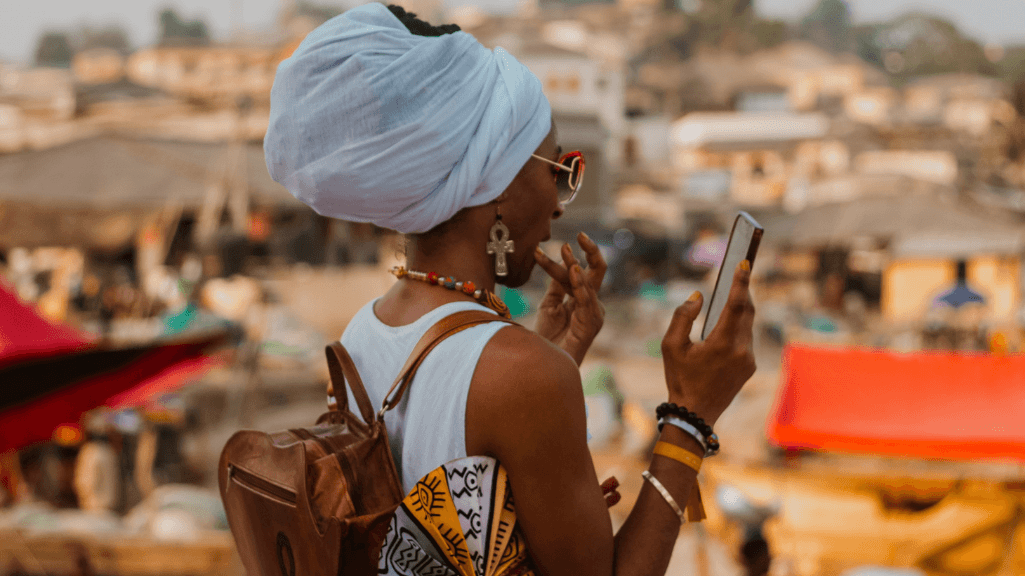
There is a question that many diaspora travelers ask before they board a flight to Ghana. They have sorted the passports, confirmed the itinerary, and chosen their accommodation. And then they stand in front of their wardrobe and pause. What do I wear?
In Ghanaian culture, clothing is never simply what you put on your body. It is a language. It is a declaration. It is one of the most visible ways that identity, community, status, and spiritual awareness are expressed. Understanding this before you arrive will not just help you dress appropriately. It will help you participate in the fullest and deepest sense.
This guide covers everything you need to know about traditional clothing in Ghana, from the history and meaning of Kente cloth and Adinkra fabric to what to wear at specific places and occasions on your Ghana heritage journey.
Why Clothing Matters on Your Ghana Heritage Journey
Ghana is a country where what you wear speaks before you do.
Dressing communicates far more than personal taste. It signals your respect for the occasion. It marks your place in the community. It honours the cultural traditions of the people whose land you are walking on. And for African diaspora travelers specifically, choosing to wear Ghanaian traditional clothing is something even deeper; it is an act of reclamation.
Think about what was taken in the centuries of the transatlantic slave trade. Names were changed. Languages were forbidden. And the clothing, the fabrics, the adornments, the visual language of identity, was stripped away too. Enslaved Africans were made to wear what their captors dictated. The act of dressing oneself according to one's own cultural tradition was, for generations, something denied.
To stand in Ghana today, wrapped in Kente cloth or wearing Adinkra fabric, is a quiet but powerful reversal of that erasure. You are wearing what was always yours. You are returning, visibly and bodily, to a tradition that was never supposed to reach you again.
Kente Cloth: The Fabric That Carries a Nation's Soul
If there is one piece of traditional clothing in Ghana that the world knows, it is Kente cloth. And yet, for all its global recognition, most people who know the name do not know the story. And the story is everything.
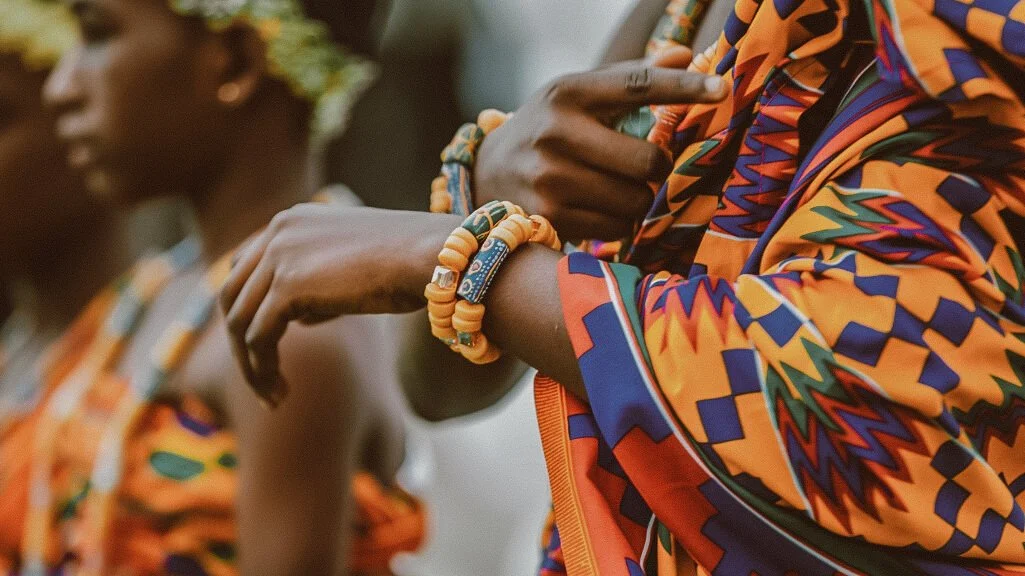
Ghana traditional clothing |Kente
Origin of the Kente Cloth
The history of Kente cloth traces back to the Ashanti Kingdom of Ghana around 1720, centered on the village of Bonwire. According to oral tradition, two hunter brothers learned the craft by observing a spider named Ananse weaving its intricate web. They replicated this interlacing technique using raffia fibers and presented their creation to the Asantehene, the king, who adopted it as a sacred royal cloth reserved exclusively for the monarchy and high court.
Over the generations, the use of Kente expanded significantly, notably through the Ewe people of southeastern Ghana, who introduced their own distinct weaving interpretations and color patterns.
Kente transitioned into global politics in 1958 when President Nkrumah wore the traditional cloth during an official White House visit with President Eisenhower. This moment declared the resilience of African cultural identity on the world stage. Today, UNESCO recognizes Kente weaving as part of the intangible cultural heritage of humanity, and the craft remains the primary source of income for the historic village of Bonwire.
What the Colours Mean
Kente is often described as a visual language. Every color, every pattern, and every combination carries meaning. To wear Kente without understanding its language is like speaking without understanding words. Possible, but missing the depth. Here is what the main colors communicate:
Gold suggests royalty, wealth, and high status. It is the color of the Ashanti Golden Stool, the sacred symbol of the Ashanti nation. Wearing gold Kente signals honor and achievement. Black carries the weight of maturity and spiritual strength. It represents a connection to ancestral wisdom and the depth of lived experience. Black Kente is not mournful. It is powerful.
Green speaks of growth, renewal, and the fertility of the land. It is the color of new life, of harvest, of forward movement. Red signals passion, sacrifice, and political struggle. It is a color of intensity, of blood, of fire, of the will to endure. Blue represents the purity of the spirit and the depth of contemplation. It is a color of peace and inner truth. White signifies purity, healing, and cleanliness of spirit. It is worn at times of spiritual significance.
Beyond individual colors, every Kente pattern carries its own name, often a proverb or a philosophical statement.
Kente and the African Diaspora
Kente cloth crossed the Atlantic long before most diaspora travelers did. It became a symbol of Pan-African pride in the 1960s, adopted by the civil rights and Black liberation movements as a visual declaration of African heritage and dignity. This annual college ritual of marking oneself with a visible sign of Africa literally weaves together the wisdom of Africa before the Middle Passage with the persistent struggle to reclaim knowledge of oneself that defines Black experience in the diaspora.
Today, wearing a Kente stole at graduation ceremonies is a tradition at universities across the United States and beyond. It is a symbol of achievement, of overcoming hardship, of honoring ancestors' sacrifices, and of asserting connection to African roots. Kente cloth matters because it makes identity visible. It turns heritage into something worn, seen, and remembered.
When you visit Ghana and wear Kente cloth, you are not participating in a fashion trend.
Adinkra Fabric: When Symbols Become a Language
If Kente is Ghana's most celebrated fabric, Adinkra is its deepest philosophical one. And for the diaspora traveller on a journey of self-discovery and ancestral reconnection, no fabric carries more personal potential.
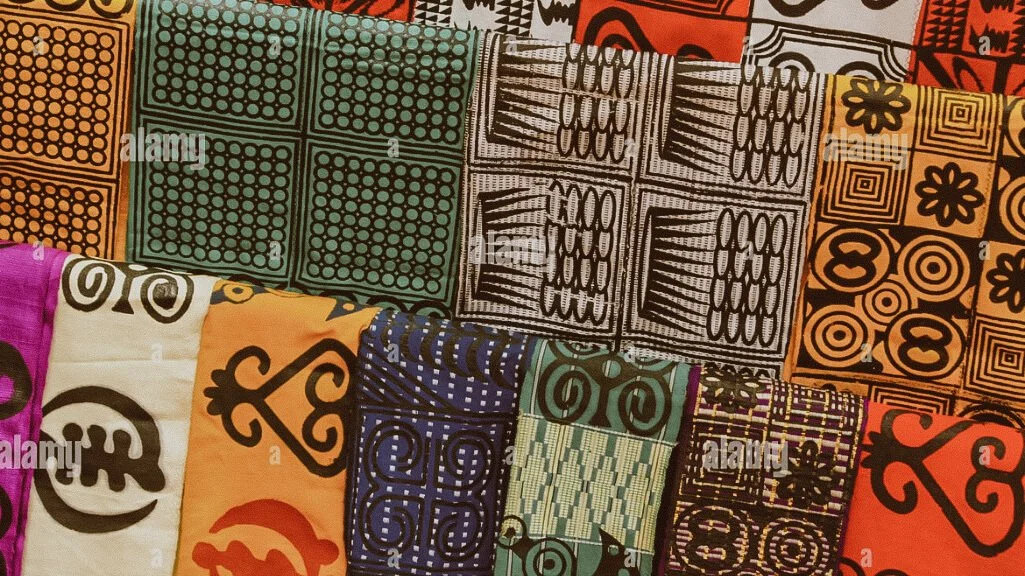
Ghana traditional clothing |Adinkra Fabric
Origins of the Adinkra Fabric
The origins of Adinkra symbols are traced to the Bono people of Gyaman, a historical kingdom located in what is now the Brong-Ahafo Region of Ghana and parts of present-day Côte d'Ivoire. The symbols were created by King Nana Kwadwo Agyemang Adinkra, who fashioned them and named them after himself. The name Adinkra comes from the Akan word dinkra, which literally means "to be separated," "taking leave," or "farewell."
When the Asante Kingdom defeated Gyaman in the nineteenth century, and King Adinkra was captured, it is said that he expressed his sorrow through patterned cloth, using symbols as a language for grief and leave-taking. The guild designers who had made Adinkra cloth for the Gyaman kings were brought to the Asante court and required to teach the craft. Gyaman King Adinkra's son Apau, skilled in the craft, was compelled to pass the knowledge on. In this way, Adinkra spread from Gyaman to the Asante and then to all Akan peoples.
One of the oldest known Adinkra cloths dates to 1817 and was collected by British envoy Thomas Bowdich during his visit to the Asante Kingdom.
What Adinkra Symbols Mean?
Adinkra symbols are visual representations of concepts, proverbs, and aphorisms. They are not decorative. Each symbol encapsulates an idea, a philosophical teaching, a warning, a celebration, a truth about human nature, or the natural world.
There are over eighty known Adinkra symbols. Here are some of the most significant ones for the diaspora traveler on a journey of return:
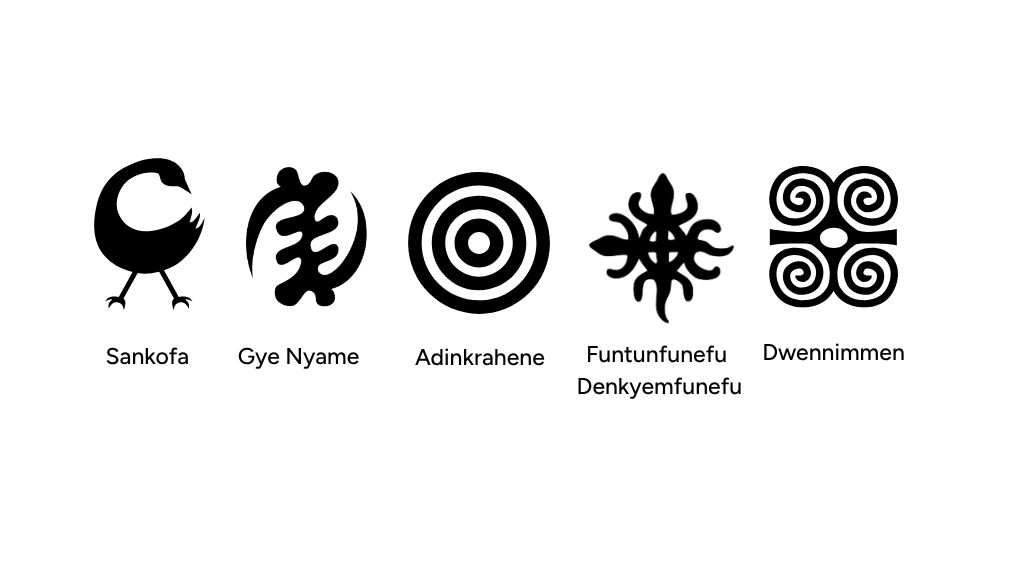
Adinkra symbols
Sankofa: perhaps the most important for anyone making the ancestral journey. Depicted as a bird that looks backwards while moving forward, or as a heart-shaped spiral, Sankofa represents the principle of returning to one's roots in order to move forward. T
Gye Nyame: "Except God." This is the most widely used Adinkra symbol in Ghana. It appears everywhere, on buildings, on fabric, on jewelry. It represents the omnipotence and supremacy of God and the acknowledgment that all things are in the hands of a higher power.
Adinkrahene: the chief of all Adinkra symbols. A series of concentric circles, it represents greatness, charisma, and leadership. It is said to be the inspiration for other symbols.
Dwennimmen: the ram's horns. It represents humility combined with strength. The ram, despite its physical power, kneels to drink water. This symbol teaches that true strength does not need to dominate
Funtunfunefu Denkyemfunefu: the Siamese crocodiles. Two crocodiles that share one stomach yet compete for food. They represent unity and shared destiny, the understanding that despite our differences, we share a common origin and fate.
For the diaspora traveler, choosing an Adinkra symbol to wear on your journey is an act of deep intention. Which symbol speaks to where you are in your life? Which one represents what you have come to Ghana to find? Let the symbols guide you.
Other Traditional Clothing in Ghana Worth Knowing
Kente and Adinkra are the most internationally recognised expressions of traditional clothing in Ghana. But they are not the whole story. Ghana is a country of more than twenty-five million people and dozens of ethnic traditions. Each of those traditions has its own dress culture, its own fabrics, and its own visual language of identity.
Kaba and Slit
The Kaba and Slit is the quintessential traditional outfit for Ghanaian women. It consists of a fitted, tailored blouse (the Kaba) and a long wrap skirt with a mobility slit (the Slit). The ensemble is tailored from fabrics like Ankara wax print, lace, or Kente.
This outfit is the go-to choice for formal events like weddings, church services, and naming ceremonies. It serves as a proud mark of respectability, femininity, and sophistication. Getting measured for a custom set by a local seamstress offers diaspora visitors a deeply personal connection to Ghanaian heritage.
Smock (Fugu/Batakari)
The Fugu, or Batakari, is a traditional sleeveless pullover garment originating from northern Ghana. It features a flared waist constructed from hand-woven cotton strips sewn together. The garment displays distinctive geometric patterns unique to the Northern, Upper East, and Upper West regions.
The smock gained pan-national significance when southern-born President Kwame Nkrumah chose to wear it to declare independence in 1957. This deliberate wardrobe choice successfully united the country under a single, shared identity. Traditionally symbolizing warrior strength and power, the Fugu has evolved into a versatile urban fashion staple.
Ankara (Wax Print)
Ankara, widely known as wax print, is a vibrant cotton fabric featuring bold, intricate designs worn across West Africa. It is the undeniable fabric of daily life, seen on school children, office workers, and market traders alike. The vast array of geometric and floral patterns reflects regional traditions and family identities.
For diaspora travelers, wearing Ankara garments bought at local markets serves as a visible sign of cultural participation rather than distant observation. Sporting a simple Ankara shirt or dress while visiting historic coastal sites instantly integrates visitors into the community. It functions as a beautiful, daily celebration of belonging.
What to Wear in Ghana
Understanding what to wear in Ghana means understanding that every occasion has its own dress logic. Here is a guide to the most significant moments on your heritage journey.
Visiting Ghana’s Heritage Sites
These are sacred places. They are not tourist attractions. They are sites of ancestral trauma, ancestral memory, and ancestral dignity. What you wear here should reflect that.
Dress with intention and respect. Avoid revealing clothing, shorts above the knee, or anything that feels flippant or casual. Many diaspora visitors choose to wear white, the colour of purity, peace, and spiritual awareness, when visiting slave castles and heritage sites.
Whatever you choose, dress as though you are visiting someone important. Because you are. You are visiting your ancestors.
Attending a Traditional Ceremony or Festival
Brightly colored Ankara or Kente is generally appropriate for celebrations. Avoid black and red if the occasion is joyful; these colors carry associations with mourning in many Ghanaian contexts. Ask your guide about the specific festival you are attending and follow their guidance on appropriate colours and fabrics.
Exploring Markets and Everyday Accra
Ghana is generally a modest and conservative country in terms of dress. Most Ghanaians keep their bodies covered. Dress neatly and modestly, not because the city requires it, but because it is respectful.
Comfortable Ankara clothing, a well-fitted shirt or blouse, and comfortable walking shoes are perfect for market days and city exploration. The markets are busy, vibrant, and occasionally crowded. Dress practically but with care.
Meeting Community Elders or Chiefs
This is one of the most significant and culturally meaningful experiences available on a Ghana tour. If you are granted an audience with a traditional chief or community elder, the way you present yourself matters enormously.
It is ideal to wear traditional Ghanaian clothing. Avoid shorts, sleeveless tops, or anything that could signal disrespect.
Before entering a chief's palace, you may be asked to remove your shoes. You may also be required to approach with your right shoulder uncovered. Your guide will instruct you. Follow the guidance and receive the experience with humility and gratitude.
Attending a Naming Ceremony or Wedding in Ghana
These are joyful occasions and Ghana's most celebrated social events. Colour and vibrancy are not just welcome, they are expected. Families often choose a specific Ankara fabric for a wedding or naming ceremony and have matching outfits made for all guests. If there is no designated fabric, choose bright Ankara or Kente in celebratory colors.
Attending a Funeral in Ghana
Ghanaian funerals are extraordinary social and cultural events that are often as joyful as they are mournful. But the dress code is specific and should be honoured.
Traditional Ghanaian funeral dress is black and red, the colours of mourning and passage. Black Adinkra cloth is particularly associated with funeral observance, reflecting the original ceremonial use for which Adinkra was created. Red signals the passion and intensity of grief. Avoid wearing white, green, or other bright colors to a funeral unless you have been specifically told otherwise.
Beach Days and Casual Travel
There are days on your Ghana tour that will call for simplicity, like beach visits, casual walks, and afternoon rest. On these days, lightweight Ankara clothing, comfortable linen, or simple natural fabrics are ideal. Ghana's climate is warm and humid. Breathable fabrics are your friend.
Even on casual days, modest dress is a sign of cultural awareness. A sarong over swimwear when leaving the beach, a light cover-up when entering any market or community space; these small gestures communicate respect and awareness.
Where to Buy Authentic Ghanaian Fabric and Clothing
Buying fabric and clothing in Ghana is one of the most meaningful things you can do on your heritage journey. But how you buy matters as much as what you buy.
Bonwire Village
Bonwire is located about eighteen kilometres from Kumasi on the Kumasi-Mampong road. It is the traditional heartland of Kente weaving for the Asante people. Here, you can watch master weavers at their narrow traditional looms, see the strips being assembled into full cloths, and purchase Kente directly from the artisans who made it.
Ntonso Village
Ntonso is located about fifteen kilometers north of Kumasi in the Ashanti region. It is the homeland of Adinkra cloth and the only place in Ghana where traditional Adinkra is made from scratch using entirely local materials and processes. Ntonso is still Ghana's biggest producer of Adinkra cloth.
Buying Adinkra from Ntonso is not simply a transaction. It is a participation in a living craft tradition. The cloth you take home will carry the hands and knowledge of people whose community has been making this since the nineteenth century.
Makola Market
Accra's markets are where Ghanaian everyday life unfolds in full colour. Makola Market is one of the largest markets in West Africa. It sells fabric, clothing, food, and everything in between. For Ankara wax print, this market is one of the best places in the country to find a vast range of options at fair prices.
Bargaining is expected at Makola. Do it with warmth and respect. Do not drive prices below a fair point. You are not simply shopping, you are participating in an economic relationship that matters to the people on the other side of the stall.
Read more about essential Ghana travel tips
Conclusion
What you wear in Ghana will come home with you.
Not just in your suitcase, folded carefully between other treasures. In the way you reach for your Kente on the days that matter. In the way you explain to your children what the Sankofa symbol means. In the way you stand a little differently, a little more rooted, in every room you walk into for the rest of your life.
Take the measurements. Choose the fabric. Learn the names of the patterns. Ask about the meaning of the symbols. Let a Ghanaian tailor make something for you that fits your body exactly. And when you leave Ghana wearing what you didn’t arrive in Ghana in, you will understand something about dress that has nothing to do with fashion.
You will understand that clothing, at its deepest, is a way of saying: I know who I am. I know where I come from. And I am not afraid to wear it.
When you are ready, Protour Africa is here. Get in touch with us

Date-Jul 2026 & Jul 2027 Number of days-10 days
This tour is curated for guests seeking the deep continuity of their Pan-African heritage. Rather than beginning with the immediate emotional weight of the coastal dungeons, this journey starts at the northern trade routes, where it all began. Follow with participation in the PANAFEST festival and conclude with the natural majesty of the Volta Region of Ghana.