
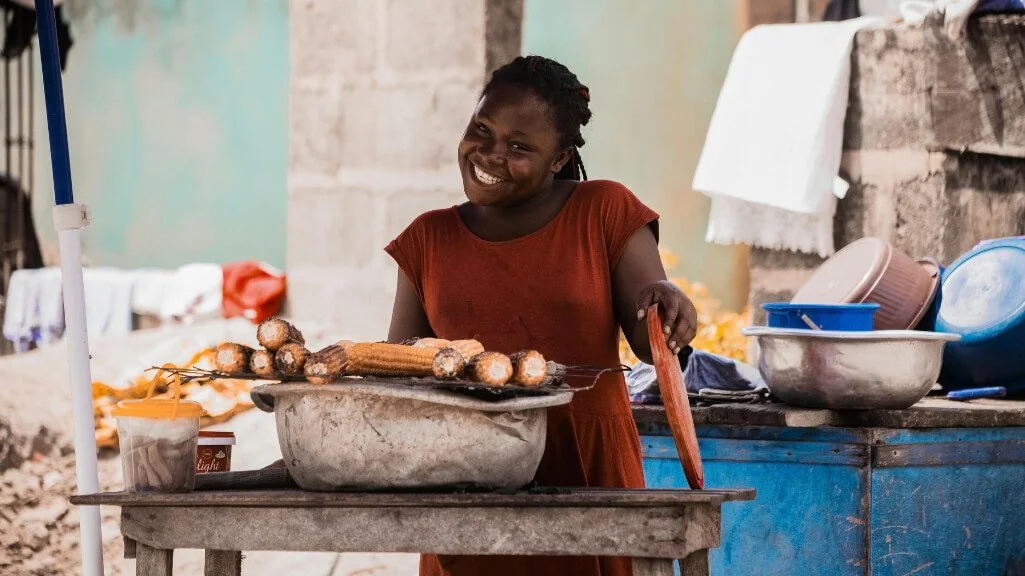
For the diaspora traveler, sitting down to eat in Ghana is not simply a meal. It is an act of recognition. The flavors that fill your mouth, the spice, the earthiness, the sweetness of ripe plantain, the slow-built heat of pepper. These are the flavors that crossed the Atlantic long before you did.
They survived the Middle Passage. Ghana food transformed into the soul food of the American South, like the rice dishes of the Caribbean, the feijão and moqueca of Brazil. They have been speaking to you your whole life, through your grandmother's pot, through the food traditions of your community, through every dish you ever described as tasting like home without knowing exactly why.
Now you are at the source.
This blog post is for those who are ready to eat with intention. Not as tourists ticking boxes, but as people returning to a table that was always set for them. These are the seven must-try Ghanaian dishes to seek out on your Ghana tour, each one a story, each one a bridge, each one a piece of the ancestry you came here to find.
Why Ghana Food Is More Than a Meal
Before we reach the dishes, it is worth pausing to understand what food means in Ghana.
In Ghanaian culture, food is never only sustenance. It is a language. It is hospitality made edible. It is community expressed in a pot. To cook for someone in Ghana is to honor them. To eat together is to affirm that you belong to each other. And to share a meal with a stranger is to make them, for that moment, family.
And then there is the deeper history. The connection between Ghanaian food and the food traditions of the African diaspora is no coincidence. It is lineage. The okra that thickened the gumbo of Louisiana came from West Africa. The black-eyed peas that became a New Year's Day tradition in the American South are native to the same soil. The rice dishes, the one-pot stews, the slow-cooked greens, the fried plantain- all of it traces its roots back to here.
When you eat Ghanaian food on your heritage journey in Ghana, you are not just discovering something new. You are recognizing something ancient.
7 Must-Try Ghana Dishes
1. Fufu and Light Soup
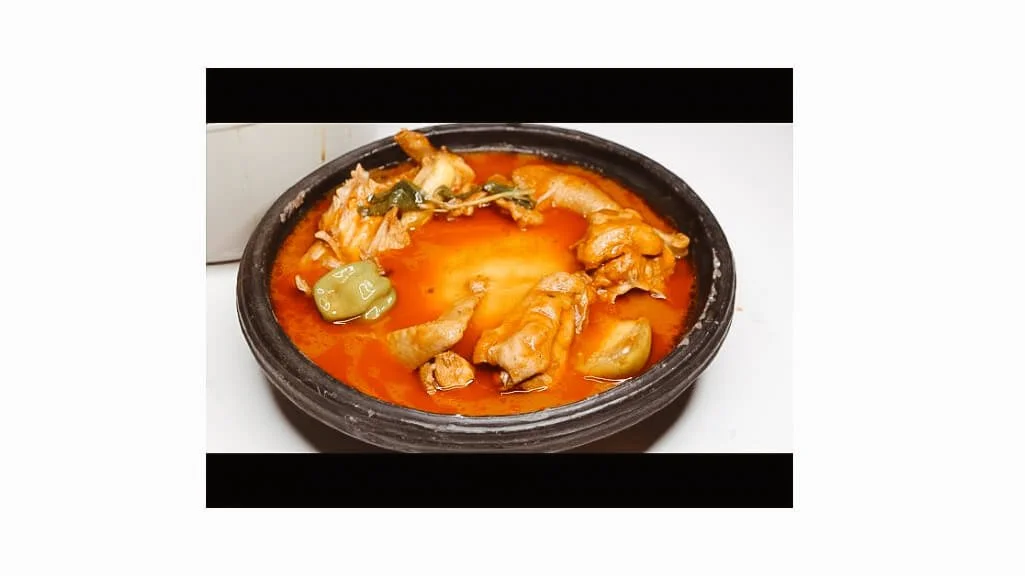
Ghana dishes | Fufu and light soup
Considered the soul of Ghanaian cuisine, fufu and light soup is a staple dish featured at family gatherings, funerals, and Sunday tables nationwide. Fufu is a smooth, stretchy dough made by boiling and pounding cassava and plantains together in a large wooden mortar. Traditionally, this evening process is performed by two people using long wooden pestles, creating a rhythmic sound that signals a fresh meal to the neighborhood.
The dish is paired with a clear, tomato-based broth known as light soup. Despite its texture, the soup is deeply spiced and flavorful, typically prepared with goat, chicken, or fish. To enjoy the meal authentically, no cutlery is used; diners tear off a piece of fufu with their fingers and form a small scoop to gather the aromatic soup. Eating from a communal bowl is a deeply intimate experience that fosters unity among those sharing the meal.
For travelers of the African diaspora, this culinary tradition often evokes an unexpected sense of familiarity. The practice of using a staple starch to soak up a meat-and-vegetable gravy is replicated across various cultures, from Caribbean dumplings to Southern soul food.
Where to find it: Almost every chop bar and traditional restaurant in Ghana serves fufu and light soup. For an authentic experience, ask your guide to take you to a local chop bar rather than a tourist restaurant. The best fufu is the kind that is pounded fresh, not blended.
2. Jollof Rice
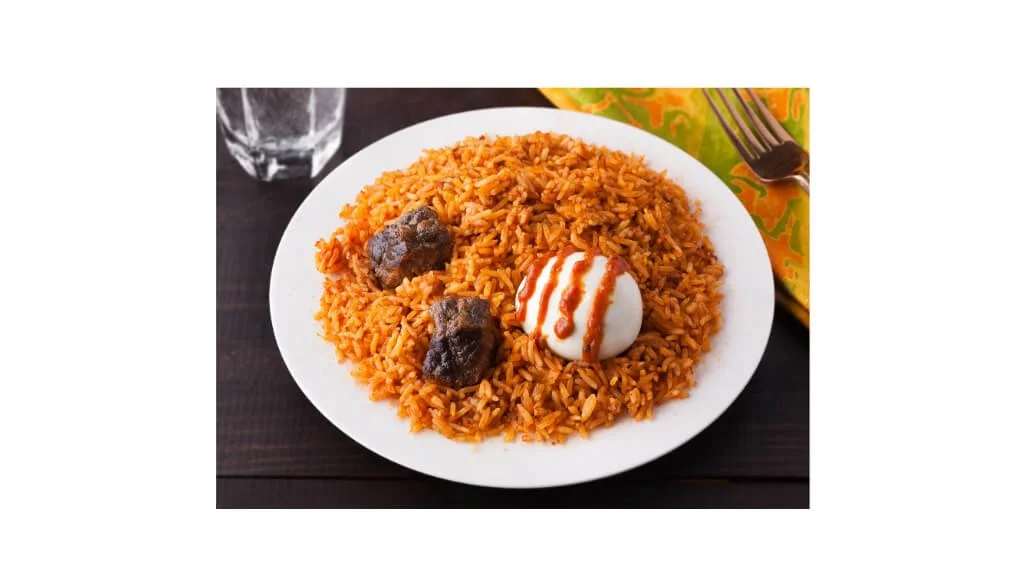
Ghana dishes| Jollof rice
No conversation about Ghana dishes is complete without talking about Jollof rice. No exploration of Ghanaian food is complete without highlighting Jollof rice, a beloved dish at the center of a passionate cultural debate known as the "Jollof Wars." The dish is believed to have originated in the ancient Wolof Empire of the Senegambian region before spreading throughout West Africa. Over centuries of migration and trade, each nation adapted the one-pot meal into a distinct point of cultural pride.
Ghanaian Jollof is unique due to its use of fragrant, light-textured basmati rice and a cooking method that heavily emphasizes slow-layering flavors. Tomatoes, onions, peppers, and spices are simmered together to create an aromatic, slightly smoky dish. Beyond being a popular recipe, Jollof rice holds immense social value in Ghana, serving as a fixture at major celebrations and symbolizing hospitality.
The flavours of Jollof rice frequently resonate with diaspora visitors, drawing immediate comparisons to Southern classics like Louisiana jambalaya. This connection is a direct historical legacy of the transatlantic slave trade, which carried West African agricultural knowledge to the American South.
Where to find it: Jollof rice is everywhere in Ghana. It is served at celebrations, roadside spots, and restaurants across the country. For the most memorable bowl, find a local celebration, a naming ceremony, a graduation, a wedding ceremony, and ask to join the table.
3. Kelewele
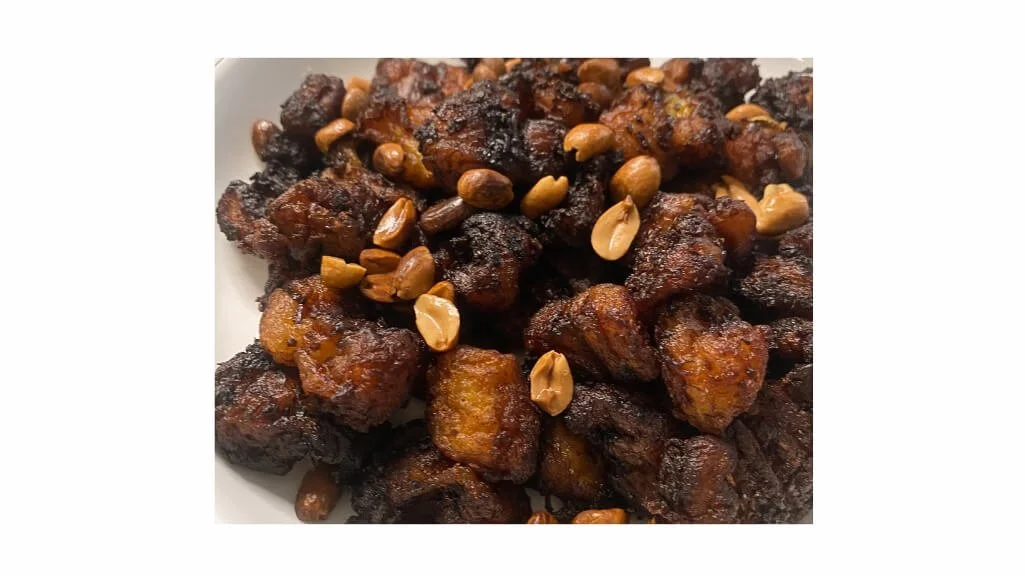
Ghana dishes | kelewele
Before your first evening in Accra is over, you will smell it.
Kelewele is a Ghanaian street food that fills the evening air of Accra, Kumasi, and Cape Coast with a distinct, enticing aroma. Rooted in the everyday cooking of the Ga and Akan tribes of southern Ghana, the dish derives its name from a Ga dialect where "kele" means to cut and "wele" means fried. It has evolved over generations into a widely cherished national snack.
The preparation of kelewele is straightforward yet brilliant, utilizing ripe plantains cut into chunks and coated in a pungent spice paste. This blend includes fresh ginger, garlic, pepper, cloves, and nutmeg, which season the fruit before it is deep-fried over open flames. The plantains are fried until the edges caramelize into a dark gold crust while the inside remains soft and sweet, then served with roasted groundnuts.
For visitors from the diaspora, kelewele offers a powerful moment of cultural recognition. Fried sweet plantain is a staple found under various names across the Americas, such as tostones or maduros in Latin America and dodo in Nigeria. This dish stands as a testament to the preservation of West African frying techniques and staple ingredients that survived the Middle Passage.
Where to find it: Kelewele is a street food and an evening food. By the middle of the twentieth century, it was a fixture at lorry stations, night markets, and chop bars. Walk any busy street in Accra after sunset and follow your nose.
Learn more about Ghana food in this Foodie's Guide to Ghana's Street Food
4. Waakye
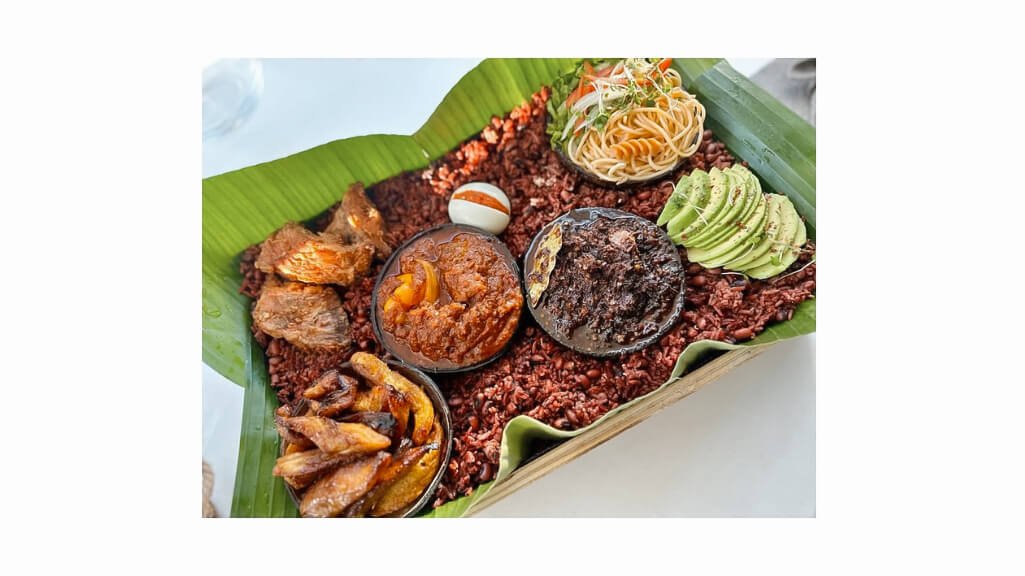
Ghana dishes| Waakye
Waakye is a monumental national institution and arguably Ghana’s most democratic and beloved street food. Derived from the Hausa word for "beans," this northern specialty showcases the nation's culinary diversity and has become a staple breakfast and brunch option. The core consists of rice and beans cooked together with dried red sorghum leaves, which impart a signature reddish-brown color and a subtle, earthy depth.
The true waakye experience, however, relies on its extensive accompanying elements. A proper plate is loaded with a combination of fried plantains, spaghetti, boiled eggs, avocado, fish or meat, a savory stew, and shito (a dark pepper sauce).
For diaspora travelers, waakye carries a profound historical resonance, as the combination of rice and beans is a diaspora staple. Black-eyed peas are native to West Africa and were brought across the Atlantic, becoming a tradition in Black American households through dishes like Hoppin' John. Waakye represents the historical origin of these comforting family staples that many grew up eating.
That bowl of rice and beans you grew up with? It started here.
Where to find it: Street food stalls all over Accra serve waakye from early morning. You can also get Waakye at Ghanaian restaurants.
5. Banku and Tilapia
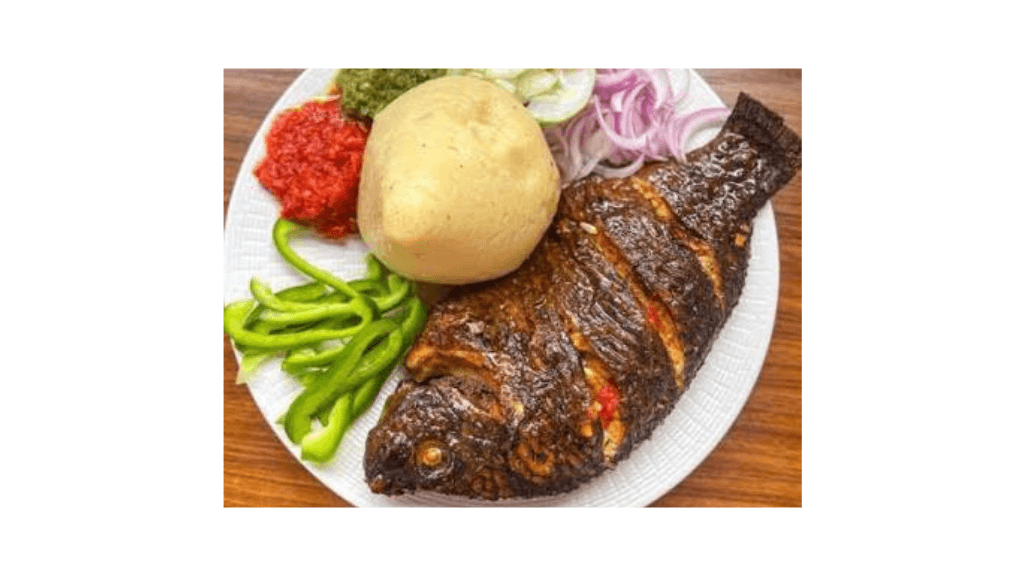
Banku and Tilapia
Originating from the Ga-Adangme people along the southeastern coast, banku and tilapia represent the distinct culinary heritage of Ghana's coastal regions. The heart of the meal is banku, a smooth, slightly stretchy ball of cooked dough characterized by a sour flavor profile. This tanginess is achieved through the ancient African food preservation technique of fermenting corn and cassava dough for several days.
The dish is traditionally paired with fresh tilapia, which is grilled directly over hot charcoal until the skin is charred and crispy. The tender fish is served with a raw, intensely spicy pepper sauce made of roughly chopped tomatoes, onions, and scotch bonnet peppers. Like fufu, banku is eaten entirely with the hands, using the fermented dough to scoop up portions of the grilled fish.
Eating banku and tilapia near historic coastal sites like Cape Coast offers a profound connection to the generations who fished these same waters. Long before contact with Europe or the introduction of corn and cassava, this coastal fermentation tradition relied on indigenous grains like millet.
Where to find it: Along Ghana's coast, particularly in Accra, Cape Coast, and Elmina, banku and grilled tilapia is sold at roadside spots, at the beach, and in local restaurants. The best version is the one cooked in front of you, on a charcoal grill, within sight of the ocean.
6. Kontomire Stew (Palava Sauce)
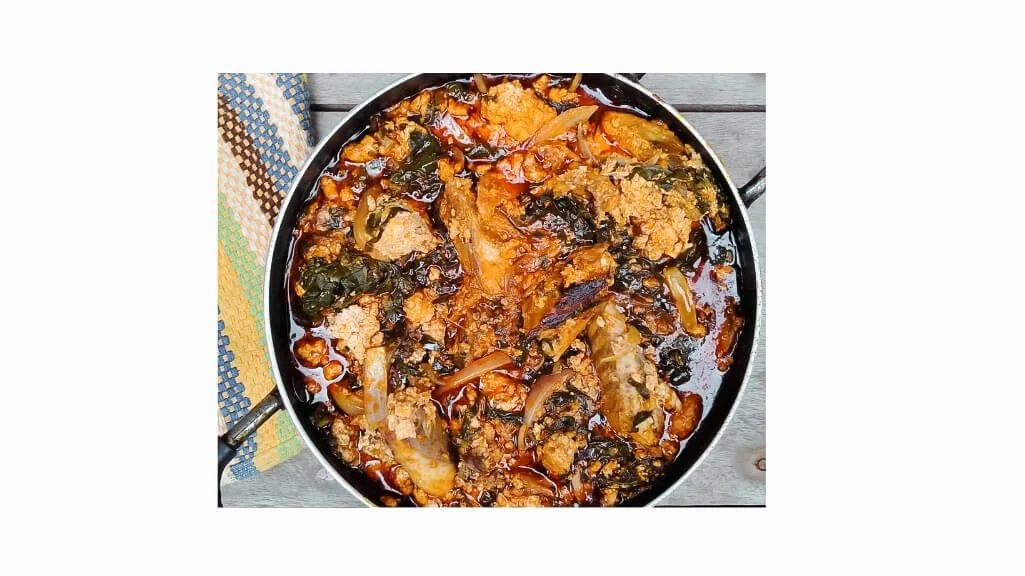
Ghana f| Palava sauce
Kontomire stew, also traditionally known as palava sauce, is a deeply flavorful Ghanaian dish that originated among the Akan-speaking people. While it may lack the global celebrity of Jollof rice, it serves as a culinary revelation for those who appreciate slow-cooked greens. The foundation of the stew relies on deep green cocoyam leaves, which possess a slightly bitter flavor and soften beautifully during cooking.
To build the rich and thick stew, the cocoyam leaves are simmered in palm oil alongside onions, tomatoes, peppers, smoked fish, and egusi (ground bitter melon seeds). The resulting dish is dark green, highly aromatic, and traditionally served as a side dish alongside ampesi. It is a combination of boiled yam or plantain. It offers a complex, building heat and a distinctly nutty texture.
For many African American visitors, tasting kontomire stew draws immediate, emotional parallels to the slow-cooked collard or mustard greens of the American South. This connection is deeply ancestral, as West African cooking techniques utilizing native ingredients were carried across the ocean during the slave trade. The dish stands as a direct predecessor to modern soul food, embodying a story of cultural survival.
Where to find it: Kontomire stew is a home dish and a chop bar staple. It is often served as a side dish alongside ampesi: boiled yam, plantain, or cocoyam. Ask for it at any traditional Ghanaian restaurant. Do not skip it.
7. Kenkey and Fish
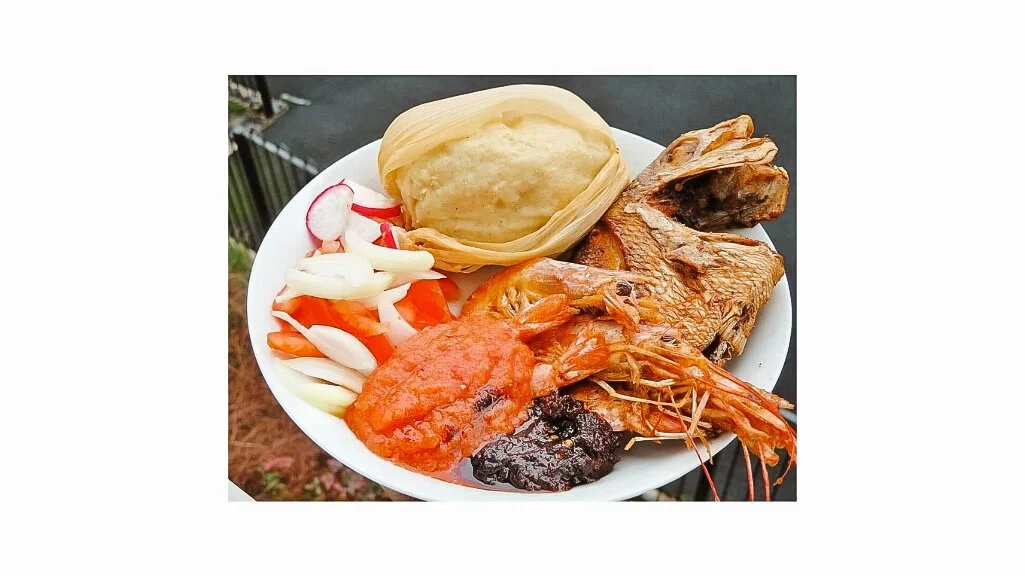
Ghana food| Kenkey and fish
Kenkey is a traditional Ghanaian staple that offers an uncompromising taste of the country's deep culinary roots. It is a dense, firm dumpling made from fermented white corn dough that is molded into balls, wrapped securely in drying corn leaves, and boiled. Known as komi by the Ga tribe and dokono by the Fante, kenkey features a distinctively sour flavor and unique texture.
This filling street food is a staple of daily life, particularly in coastal cities like Accra and Tema, where it is commonly eaten for breakfast or lunch. It is served alongside fried or grilled fish, a fiery raw pepper sauce, and shito, a dark condiment made from dried fish and spices. While the initial sourness and density can surprise first-time palates, the flavors harmonize perfectly when eaten together.
The fermentation process central to making kenkey represents one of the oldest culinary techniques in African history, functioning as a form of cultural memory. Similar preservation methods and sour flavor notes survived the Middle Passage, manifesting in various Caribbean dumplings and southern breads. Experiencing kenkey provides an authentic window into Ghanaian history, where cooking served as a hidden language of survival.
Where to find it: Kenkey is sold by street vendors, particularly in coastal areas and in Accra's markets. Look for it early in the morning or midday, although some people take it for dinner. Some Ghanaian restaurants have this on their menu. Ask your local guide for the best experience.
Where to Eat Like a Local on Your Ghana Tour
Understanding Ghanaian dishes is one thing. Knowing where to find it is another. Here are some places to get Ghanaian food when you visit the motherland.
Chop Bars
A chop bar is a small, informal eatery, often run by a family, often with plastic chairs and a handwritten menu that changes daily. Chop bars are where Ghanaians eat when they are not eating at home. They are cheap, they are generous, and the food is made from scratch, in the way it has always been made. Visiting a chop bar is not a compromise. It is the best possible choice. Ask your guide to take you to the one that the locals in your neighbourhood actually use.
Markets
Ghana's markets are not just places to buy things. They are living communities, social spaces where food is cooked, sold, shared, and celebrated all at once. In Accra, Makola Market and the surrounding streets are full of women selling waakye, kelewele, kenkey, and freshly fried fish. The sensory experience of eating at a market in Ghana, the noise, the colour, the warmth, the food coming at you from every direction, is one of the most alive experiences your Ghana tour can offer.
Osu and Labadi in Accra
For travelers who want to combine authentic Ghanaian food with a slightly more comfortable setting, the Osu neighborhood in Accra offers a wide range of restaurants and eateries serving excellent traditional food alongside contemporary Ghanaian cuisine. The beach areas of Labadi and La also offer beautiful outdoor spots where grilled tilapia and cold drinks are a perfect combination at the end of a long day of heritage travel.
The Diaspora Connection: Tasting What Was Carried Across the Ocean
There is a question that many diaspora visitors find themselves asking at some point during a Ghana tour. It usually happens at the table. Why does this taste familiar? The answer is not imagined. It is historical.
For West Africans who survived the Middle Passage, strong agricultural skills and food memories allowed them to re-plant their foodways in the new world. The seeds and techniques they carried became the foundation of what later emerged as African American cuisine.
For many diaspora travelers, this recognition, this moment of tasting the origin of something that has always been in your kitchen, your family's kitchen, your community's kitchen, is one of the most emotional moments of the entire journey.
You have been eating your way home all along. You just did not know where home was until now.
Practical Tips for Food Experiences on Your Ghana Tour
Eat at local hours: Waakye and kenkey are early morning foods. Light soup and fufu are best at midday or in the evening. Following local eating rhythms will connect you more deeply to the culture and ensure you encounter food at its freshest and most alive.
Eating with hands is welcome. Many Ghanaian dishes like fufu, banku and kenkey are traditionally eaten with the hands. This is not a lesser way of eating. It is the complete way of eating. It connects you physically to the food and to the people eating alongside you.
Be honest about spice tolerance: Ghanaian food can be very hot. Shito, the pepper sauces, and certain soups are genuinely fierce. It is completely acceptable to ask for a milder version. A good guide or host will appreciate your honesty. What matters is that you eat, not that you suffer.
Visit a local cooking class: Several cultural organizations and heritage tour operators in Ghana offer cooking experiences where you can learn to prepare dishes like fufu, kontomire stew, and Jollof rice directly from Ghanaian home cooks. This is not a tourist activity. It is one of the most intimate forms of cultural exchange available to you.
Trust your guide: The best Ghana food experiences happen when you follow someone who knows. A culturally grounded guide will take you past the tourist-facing restaurants and into the real Ghanaian food culture. They can guide you to the family homes, the chop bars, the market stalls, the evening kelewele spots that only locals know by name.
Read more interesting facts about Ghana in this blog
Conclusion
For African diaspora travelers who have spent a lifetime feeling somewhere between two cultures, belonging fully to neither the world of their ancestors nor the world they were raised in. The Ghanaian table offers something extraordinary; it is a place where you are not alone. A place where the food knows who you are before you do. A place where every bowl, every spice, every shared meal is the continent saying: Welcome back. We kept a seat for you.
Ghana food is not separate from the heritage journey. It is part of it. When you walk through the Door of Return at Cape Coast Castle and feel something shift inside you, and then you sit down to fufu and light soup with people who call you family, you are not just eating. You are completing something.
You are tasting where you came from. You are tasting home.
When you are ready, Protour Africa is here. Get in touch with us

Date-Jul 2026 & Jul 2027 Number of days-10 days
This tour is curated for guests seeking the deep continuity of their Pan-African heritage. Rather than beginning with the immediate emotional weight of the coastal dungeons, this journey starts at the northern trade routes, where it all began. Follow with participation in the PANAFEST festival and conclude with the natural majesty of the Volta Region of Ghana.