
15 Interesting Facts About Ghana for Diaspora Travelers
Ghana is not what the world told you it was. It is older, richer, and more extraordinary than any headline or travel brochure has ever captured.
For those who carry the heritage of the African diaspora and are preparing for their first or third journey to Ghana, the facts in this guide are not mere trivia. They are the context and foundations beneath the soil you will stand on. Understanding them before you arrive does not diminish the wonder of discovery. It deepens it. These interesting facts about Ghana can help frame your experience if you're travelling to Ghana for the first time or returning.
Here are 15 interesting facts about Ghana that will change how you see the country and perhaps how you see yourself when you are travelling to Ghana.
1. Ghana Was the First Sub-Saharan African Country to Gain Independence
On 6 March 1957, Ghana became the first country in sub-Saharan Africa to achieve independence from colonial rule. Under the leadership of Kwame Nkrumah, one of the great Pan-African visionaries of the twentieth century, Ghana declared its freedom from British colonial administration and sent a message to the entire continent: liberation is possible.
Nkrumah's famous declaration, "The independence of Ghana is meaningless unless it is linked up with the total liberation of Africa" remains one of the most powerful statements in the history of African self-determination. When you stand in Accra's Independence Square, you are standing on the ground where that history was made.
2. Ghana Is the Gateway to Africa
Ghana's identity as the Gateway to Africa is more than a tourism slogan. Geographically, it sits at the center of the West African coast, making it historically and logistically central to the continent's relationships with the rest of the world. Culturally, it has positioned itself, especially through the Year of Return in 2019 and the ongoing Beyond the Return initiative, as the welcoming point for the global African diaspora. The Ghanaian government's investment in diaspora welcome is genuine and significant. You will feel it when you land.
3. The Ashanti Kingdom is One of the Most Powerful Pre-Colonial Civilizations in African History
Long before European colonization reshaped the continent, the Ashanti Kingdom in what is now central Ghana was a sophisticated, highly organized, and militarily powerful civilization. Its capital, Kumasi, was a city of extraordinary wealth and cultural richness. The Ashanti were known for their mastery of gold. Ghana is estimated to have held a significant portion of the world's known gold in the pre-colonial era and for its governance structures, oral traditions, and spiritual practices.
The Ashanti Kingdom still exists today. The Asantehene, the Ashanti king, continues to hold significant cultural authority, and the Manhyia Palace in Kumasi remains a living center of Ashanti governance and tradition. Visiting Kumasi is not a journey into the past. It is an encounter with a civilization that never stopped.
4. Kente Cloth Carries Meaning in Every Thread
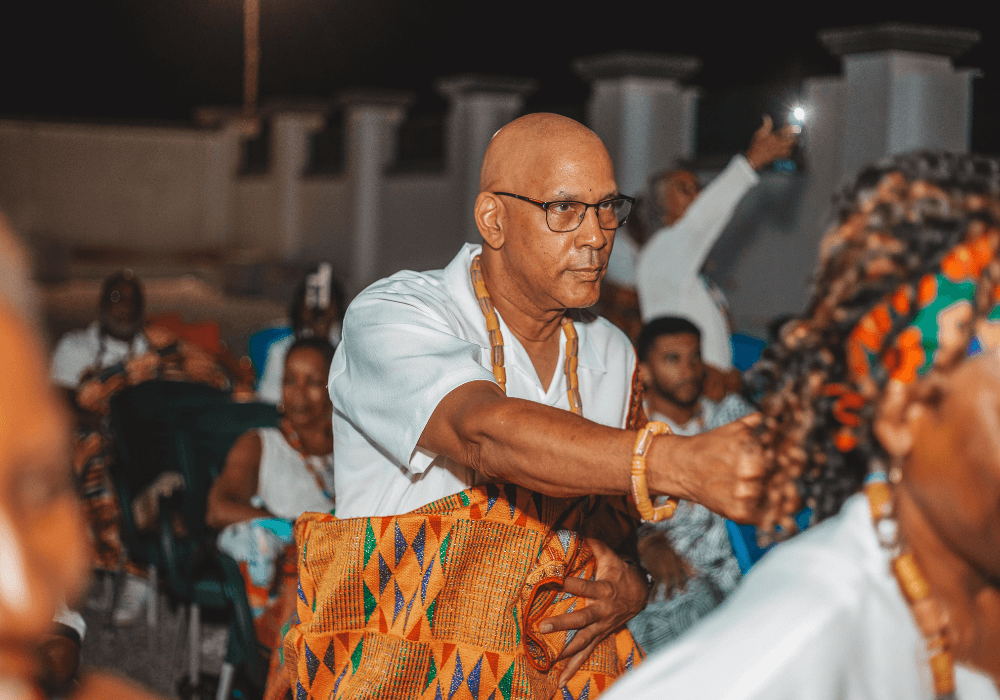
Kente cloth, one of the most recognizable symbols of African heritage globally, originated with the Ashanti people of Ghana. But Kente is not simply a beautiful fabric. It is a language. Every pattern, every color combination carries a specific meaning: gold represents royalty and wealth, green represents growth and renewal, black represents spiritual strength and maturity, and specific patterns are associated with particular values, proverbs, or occasions.
When diaspora communities around the world wear Kente at graduations, celebrations, and ceremonies, they are continuing a tradition of cultural communication that stretches back centuries to the looms of the Bonwire weavers outside Kumasi. Visiting a Kente weaving village is one of the most connecting experiences available to any traveler in Ghana.
5. Ghana is One of the Most Politically Stable Countries in Africa
Ghana has held peaceful democratic elections consistently since its return to multi-party democracy in 1992, a record that makes it one of the most politically stable countries not just in Africa, but in the developing world. Power has transferred peacefully between parties multiple times, and Ghana is regularly cited by international governance indices as a model of democratic practice on the continent.
This is important context for diaspora travelers who may have been conditioned by Western media to associate Africa broadly with political instability. Ghana's democratic track record is a fact worth knowing before you go.
6. The Year of Return Transformed the Relationship Between Ghana and the Diaspora
In 2019, marking 400 years since the first enslaved Africans arrived in Virginia, the Ghanaian government launched the Year of Return, a landmark initiative inviting the global African diaspora to come home. The response was extraordinary: over one million visitors came to Ghana in 2019, and the cultural and emotional impact was profound. Celebrities, activists, academics, and ordinary diaspora families made the journey. Many wept at the castles. Many took citizenship. Many never left.
The Year of Return became Beyond the Return, an ongoing program cementing Ghana's identity as the home of the diaspora. The Ghanaian government now offers a Right of Abode certificate to individuals of African descent in the diaspora, granting them the right to live and work in Ghana indefinitely.
7. Ghanaian Food Has Deep Connections to African American and Caribbean Cuisine
One of the most quietly powerful moments for many diaspora travellers in Ghana is the first meal. The flavours are familiar in ways that feel like memory rather than discovery. Jollof rice, fried plantain, black-eyed peas, peanut-based stews, okra soups, cornmeal porridge, these are not coincidences. They are the living evidence of the culinary knowledge that enslaved Africans carried with them across the Middle Passage, and which took root in the kitchens of the American South, the Caribbean, and beyond.
Eating in Ghana is not merely a pleasure. For diaspora visitors, it is often a form of recognition, a conversation between the past and the present conducted through taste.
8. Ghana Has Over 100 Ethnic Groups and Languages
Ghana is a country of extraordinary cultural diversity. Over 100 ethnic groups call Ghana home, each with its own language, traditions, spiritual practices, and governance structures. The major groups include the Akan (of which the Ashanti are a subgroup), the Ewe, the Ga, the Dagomba, and the Fante, but this list barely scratches the surface.
English is the official language of governance and education, inherited from the colonial era, but daily life in Ghana unfolds in a rich tapestry of indigenous languages. Twi is the most widely spoken, and learning even a few phrases before you travel communicates something powerful to the people you meet: that you came to connect, not just to observe.
9. Cape Coast Castle Was Built by the Portuguese in 1653, and Changed Ownership Seven Times
Cape Coast Castle, one of the most significant heritage sites in Ghana and in the world, has one of the most contested histories of any building on the continent. Built initially by the Portuguese and later seized and expanded by the Swedish, Danish, and finally the British, it changed hands seven times over the course of two centuries, from first construction to Ghanaian independence.
This history of contested ownership reflects the broader history of West Africa's coastline, a landscape fought over by European powers for centuries, with the trade in enslaved human beings as the primary prize. Understanding this history before you visit gives your time inside the castle a context that makes the experience even more profound.
Read more about what to expect at the Cape Coast Castle
10. The Sankofa Symbol Originates from Ghana
The Sankofa symbol, a bird turning its head backwards, often depicted as a heart shape, from the Akan people of Ghana, carries one of the most resonant philosophical messages in all of African thought: 'Se wo were fi na wosankofa a yenkyi'. That means: it is not wrong to go back for what you forgot.
Sankofa is the philosophical principle that guides Protour Africa's entire approach to diaspora reconnection travel. It is the idea that understanding the past is not a retreat from the future; it is the foundation of moving forward with wholeness and clarity. When you see the Sankofa symbol throughout Ghana, you are seeing a culture that has always understood the value of looking back to move forward.
11. Ghana is Home to Some of the World's Most Important Sacred Groves
The Tafi Atome Monkey Sanctuary and the Boabeng-Fiema Monkey Sanctuary are two of the most visited sacred sanctuaries in Ghana. The Tafi Atome Monkey Sanctuary and the sacred groves of the Krobo people are among Ghana's lesser-known but deeply significant natural and spiritual heritage sites. The Boabeng-Fiema Monkey Sanctuary, where colobus and mona monkeys are protected as sacred animals by the community, offers a window into the living relationship between Ghanaian communities and the natural world. A relationship that is rooted in spiritual beliefs that predate any colonial influence.
12. W.E.B. Du Bois Chose Ghana as His Final Home
William Edward Burghardt Du Bois, one of the most significant Black intellectuals in history, co-founder of the NAACP, author of The Souls of Black Folk, and lifelong advocate for Pan-African unity, chose to spend the final years of his life in Ghana at the invitation of President Kwame Nkrumah.
He died in Accra on 27 August 1963, the day before Martin Luther King Jr. delivered his 'I Have a Dream' speech at the March on Washington.
The W.E.B. Du Bois Centre in Accra, where he is buried, is one of the most moving heritage sites in the city and a powerful symbol of the Pan-African vision that Ghana has held at its core since independence.
13. Highlife Music Was Born in Ghana
Highlife, one of Africa's most influential musical genres, was born in Ghana in the late nineteenth and early twentieth centuries, blending traditional Akan melodies with Western instruments introduced through colonial contact. It became the sound of independence, of celebration, of modern Ghanaian identity, and its rhythms spread across West Africa and the diaspora.
Ghana's contemporary music scene is a continuation of this creative tradition. Afrobeats, hiplife, and contemporary R&B artists from Ghana are shaping the global sound of African music today. Accra's live music venues are extraordinary spaces for experiencing this living culture.
14. Ghana Produces the World's Second Largest Quantity of Cocoa
Ghana is the world's second largest producer of cocoa, after the Ivory Coast, a fact with deep historical and contemporary significance. Cocoa transformed Ghana's economy in the colonial era and remains central to it today. But the relationship between West Africa's cocoa production and the global chocolate industry is complex, contested, and worth understanding before you travel.
Ghana has been working to move up the cocoa value chain, producing premium Ghanaian chocolate domestically rather than simply exporting raw beans. Supporting Ghanaian-made chocolate products during your visit is one small but meaningful way to participate in that economic journey.
15. Ghanaians are Among the Most Welcoming People in the World
This is not a marketing claim. It is one of the most consistently reported experiences of travellers to Ghana across nationalities, backgrounds, and purposes of travel. The Ghanaian concept of hospitality is woven into the culture at every level. Strangers are greeted. Guests are fed. Questions are answered with patience and warmth.
For diaspora travellers who may have carried uncertainty about whether they would feel truly welcome, whether they would be seen as outsiders or as family, the welcome that Ghana extends is one of the most disarming and healing aspects of the journey. Akwaaba is not just a word. It is a lived value.
Bonus Facts About Ghana for Travellers
Where is Ghana located?: Ghana sits on the west coast of Africa, bordered by Côte d'Ivoire to the west, Burkina Faso to the north, Togo to the east, and the Gulf of Guinea to the south, placing it at the geographic heart of West Africa and within reach of major international travel hubs.
What is the currency of Ghana?: Ghana's official currency is the Ghanaian Cedi (GHS). ATMs and licensed forex bureaux are widely available in Accra and major towns, and most hotels and established restaurants accept international cards. When travelling to smaller communities and rural areas, carrying local cash is always advisable.
World Heritage Sites in Ghana: Ghana is home to two UNESCO World Heritage Sites: the Forts and Castles of Volta, Greater Accra, Central and Western Regions, which include the ancestral sites of Cape Coast and Elmina castles, and the Ashanti Traditional Buildings, a collection of sacred shrines and ceremonial structures that speak to the extraordinary spiritual and architectural heritage of the Ashanti Kingdom.
How long does it take to get a Ghana visa?: The Ghana e-visa is available to most nationalities through the official Ghana Immigration Service online portal. Standard processing typically takes between five and ten business days. We recommend applying at least three to four weeks before your departure date to allow time for any queries, and always confirm current requirements with the Ghanaian Embassy in your country before applying.
Conclusion
No list of facts can capture what Ghana actually is. The facts about Ghana above are the foundations of the context beneath the experiences that await you. The real knowing happens when you arrive: when you stand in a Kente weaving village and watch pattern become language. It happens when you taste jollof rice at a family table and recognize something ancient in the flavor, when you walk through the Door of Return at Cape Coast Castle and see the reality of homecoming.
Ghana is not a destination. It is a return. And it has been waiting for you.
Ready to make a journey to the motherland? Get in touch with Protour Africa and plan your trip.
Q&A
Question: What does Ghana’s “Gateway to Africa” identity mean for diaspora travellers?
Answer: It’s more than a slogan. Ghana’s central position on West Africa’s coast and its intentional outreach to the global African diaspora, especially through the 2019 Year of Return and the ongoing Beyond the Return initiative, make it a genuine point of welcome. The government’s investment in receiving the diaspora is real; you’ll feel it when you land. Practically, Ghana also offers a Right of Abode certificate to people of African descent, granting the right to live and work in Ghana indefinitely.
Question: How can I experience the living Ashanti Kingdom, and why does Kente matter?
Answer: The Ashanti Kingdom remains a vibrant institution today: the Asantehene holds significant cultural authority, and Kumasi’s Manhyia Palace is a living center of governance and tradition. Kente, originating with the Ashanti, is more than a beautiful fabric; it’s a language. Colors carry meaning (gold for royalty/wealth, green for growth, black for spiritual strength), and patterns are tied to values and occasions. Visiting weaving communities like Bonwire lets you witness this ongoing cultural conversation thread by thread.
Question: Why is visiting Cape Coast Castle such a powerful experience?
Short answer: Built by the Portuguese in 1653 and changing hands seven times among European powers before British abolition and Ghanaian independence, Cape Coast Castle concentrates the contested history of West Africa’s coast and the trade in enslaved Africans. Understanding this context beforehand deepens the impact of walking its corridors and passing through the Door of Return, turning a site visit into a profound historical encounter.
Question: In what ways will Ghanaian food feel familiar to African American and Caribbean visitors?
Answer: Dishes like jollof rice, fried plantain, black-eyed peas, peanut-based stews, okra soups, and cornmeal porridges echo across the Americas because enslaved Africans carried culinary knowledge across the Middle Passage. For many diaspora travelers, the first meal in Ghana feels like recognition, an intimate dialogue between past and present expressed through taste.
Question: Is Ghana politically stable and genuinely welcoming for first-time visitors?
Answer: Yes. Since returning to multi-party democracy in 1992, Ghana has held peaceful elections with multiple transfers of power and is regularly cited as a model of democratic practice on the continent. Hospitality is woven into daily life. Akwaaba (“welcome”) is a lived value. Travelers, especially from the diaspora, often report being received with warmth, patience, and a sense of family.

Date-Jul 2026 & Jul 2027 Number of days-10 days
This tour is curated for guests seeking the deep continuity of their Pan-African heritage. Rather than beginning with the immediate emotional weight of the coastal dungeons, this journey starts at the northern trade routes, where it all began. Follow with participation in the PANAFEST festival and conclude with the natural majesty of the Volta Region of Ghana.