
How to Plan a Trip to Ghana: A Complete Guide
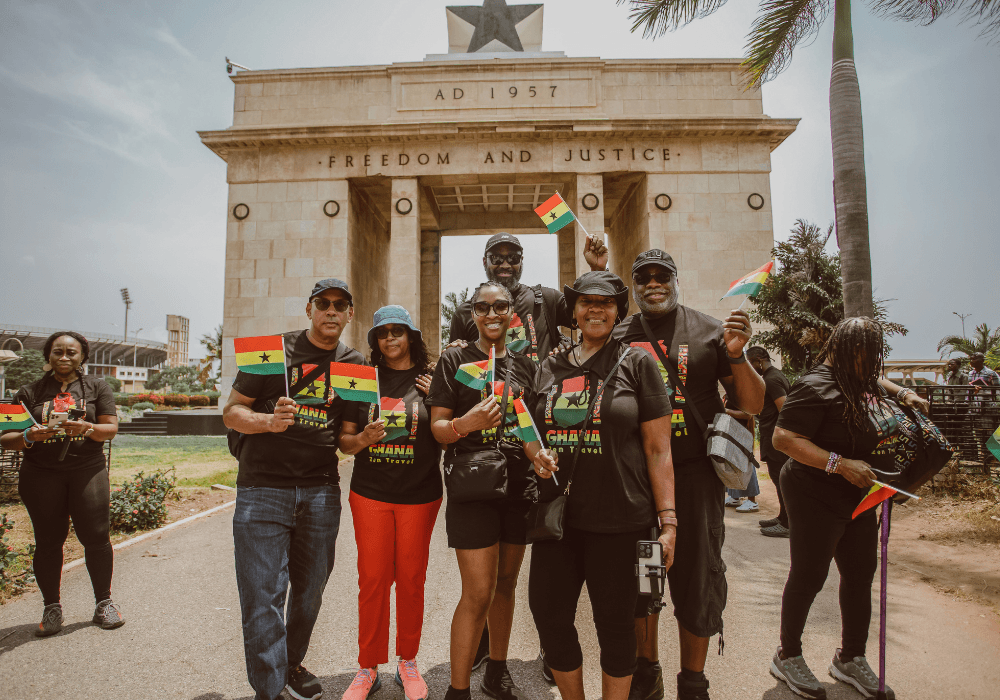
Planning a trip to Ghana is not like planning any other journey. For many who feel the pull of return, especially those who carry the heritage of the African diaspora, it is less a logistical exercise and more an act of preparation for something life-changing.
This guide will walk you through everything you need to know about how to plan a trip to Ghana. This includes practical Ghana travel tips: when to go, how to get there, what to see, how to navigate the cultural landscape, and how to ensure that your journey does more than scratch the surface of what Ghana offers.
Because Ghana does not offer you a destination, it offers you a return.
Step 1: Know Why You Are Travelling to Ghana
Before you open a booking page, before you compare flights or research hotels, start with the question that matters most: Why Ghana?
Are you going to stand on ancestral ground and feel the weight and the beauty of that? Are you going to witness the history of the transatlantic slave trade at Cape Coast and Elmina with your own eyes? Are you going to connect with Ghanaian communities, hear their stories, and carry something of that exchange home? Are you going to begin answering questions about your lineage that have gone unanswered for generations?
The reason you go shapes everything that follows the itinerary you choose, the experiences you prioritize, the pace you travel at, and the kind of guide or company you need beside you. The reason you go is the first and most important thing to clarify before you plan anything else.
Step 2: Choose the Best Time to Visit Ghana
Ghana is a year-round destination, but different seasons offer different experiences. When you plan a trip to Ghana, the time you choose will significantly shape your journey.
November to March: The Dry Season
This is the most popular time to visit Ghana, and for good reason. The weather is warm and dry, the roads are at their most navigable, and the cultural calendar is rich, particularly around the Christmas and New Year period. December has become especially significant for diaspora travelers, with Ghana's official December in Ghana program offering a curated season of cultural events, heritage experiences, and community gatherings. If you are planning your first visit to Ghana, the November-to-March window offers the best conditions for exploring the country comfortably.
April to June and September to October: The Shoulder Seasons
These months offer a quieter, more intimate experience of Ghana. Fewer international visitors mean more space at heritage sites, more personal interactions with local communities, and a slower, more reflective pace of travel. For those planning a deeply personal ancestral journey, the shoulder seasons can offer something that peak season cannot: stillness.
July to August: The Rainy Season
The rains transform Ghana's landscape into lush, vibrant green. Travel is more challenging but the country is undeniably beautiful. Heritage sites are quieter, accommodation is often more affordable, and the sense of having Ghana almost to yourself can be deeply rewarding for the right traveller.
Step 3: Plan Your Ghana Itinerary Around What Matters Most
Ghana rewards the traveller who goes slowly. A meaningful journey is not about covering as many sites as possible. It is about going deeply into the ones that matter most to you. Here is a framework for building an itinerary that honours that principle.
Accra: The Living City
Most journeys to Ghana begin and end in Accra, and the capital deserves far more than a transit night. Accra is a city of extraordinary energy, a place where ancestral heritage and contemporary African creativity exist side by side. The W.E.B. Du Bois Centre, where the great Pan-African scholar is buried, is one of the most moving heritage sites in the city.
The National Museum of Ghana holds a deep collection of cultural and historical artefacts. Jamestown, the old colonial quarter by the waterfront, carries layers of history in its architecture and community life. And Accra's creative scene, its galleries, its restaurants, and its markets reflect a city in the middle of a cultural renaissance.
The Central Region: Cape Coast and Elmina
No trip to Ghana is complete without time on the heritage coast. Cape Coast Castle and Elmina Castle are the two most significant ancestral sites in West Africa for the diaspora, and they deserve full days, not rushed half-day excursions. The Assin Manso Ancestral Slave River Site, where the remains of two diaspora individuals have been repatriated and reburied, adds another profound dimension to the Central Region experience. Plan at least two to three days in this region.
The Ashanti Region: Kumasi and Cultural Heartland
Kumasi is the cultural capital of the Ashanti Kingdom, one of the most powerful pre-colonial civilizations in West Africa. The Manhyia Palace Museum tells the story of the Ashanti monarchy. The Kejetia market is the largest open-air market in West Africa and a sensory experience of extraordinary richness. And the Kente weaving villages just outside Kumasi offer an encounter with one of Africa's most recognized and deeply meaningful textile traditions. Kente cloth is not a decoration. It is communication; each pattern carries meaning, each color tells a story.
The Volta Region: Nature and Community
For those who want to balance heritage with natural beauty, the Volta Region offers Lake Volta, one of the world's largest man-made lakes, alongside lush green hills, waterfalls, and communities whose traditions stretch back centuries. The pace of life in the Volta Region is slower, more rural, and deeply grounding.
Ready to return to the motherland? This blog highlights the top things to do in Ghana for diasporans.
Step 4: Sort the Practical Travel Requirements
Flights
Accra's Kotoka International Airport (KIA) is well-connected to major international hubs. Direct flights operate from London Heathrow, New York (JFK), Washington Dulles, Atlanta, and several other cities with large diaspora populations. British Airways, Delta, United, and several African carriers serve routes to Accra.
Visa Requirements
Most international visitors to Ghana require a visa. Applications can be made through Ghanaian embassies or, for many nationalities, through Ghana's online e-visa portal. Processing times vary, so apply well in advance of travel. Citizens of ECOWAS member states do not require a visa. It is always worth confirming current requirements with the Ghanaian Embassy in your country before you travel.
Health and Vaccinations
A yellow fever vaccination certificate is required for entry into Ghana. Malaria prophylaxis is strongly recommended; consult your doctor or a travel health clinic at least six weeks before departure. Travellers should also ensure they are up to date on routine vaccinations, including hepatitis A and B, typhoid, and tetanus. Ghana has good quality private healthcare in Accra, and the country is well-equipped for the needs of international visitors.
Currency and Money
Ghana's currency is the Ghanaian Cedi (GHS). ATMs are widely available in Accra and other major towns. Credit cards are accepted at most hotels, larger restaurants, and established businesses. When travelling to smaller towns and rural communities, carrying cash is advisable. Currency exchange is available at the airport and at licensed forex bureaux throughout the country.
Mobile Connectivity
Ghana has reliable mobile network coverage in urban areas and along the main travel routes. Purchasing a local SIM card at the airport is straightforward and affordable, and gives you access to data at reasonable rates. MTN and Vodafone Ghana are the two most widely used networks.
Step 5: Understand Ghanaian Culture Before You Arrive
Ghana is one of the most welcoming countries in the world for diaspora visitors, but arriving with cultural awareness deepens every encounter. Here are some key Ghana travel tips to know.
Greetings matter deeply. In Ghanaian culture, taking the time to greet someone properly before conducting any business or asking for anything is not optional; it is the foundation of every interaction. Ask how someone is doing. Take a moment. The relationship comes first.
The right hand is the hand of respect. Use it for giving, receiving, eating, and greeting. The left hand is traditionally considered unclean.
Dress modestly when visiting communities, villages, and religious or heritage sites. Ghanaians dress with care and formality for many occasions, and matching that respect is appreciated.
Ask before photographing people. A brief greeting and a simple request almost always result in a warm yes. A camera raised without permission is a barrier, not a bridge.
Learn a few words of Twi, the most widely spoken Ghanaian language. Even a simple 'Akwaaba' (welcome) or 'Medaase' (thank you) opens doors and communicates something important: that you came to meet people, not to observe them.
Discover more cultural etiquette and Ghana traditions that travelers should know
Step 6: Choose Your Local Guide Carefully
Who guides your Ghana trip journey can either make your journey memorable or not. A guide is not simply someone who navigates logistics. A guide carries cultural authority, historical knowledge, and the ability to hold space for what you are experiencing. The right guide transforms a trip into a journey. The wrong one reduces a profound experience to a checklist.
When choosing a guide or heritage travel company to help you plan a trip to Ghana, ask these questions: Do they have deep community relationships in Ghana, or are they transactional operators? Do they understand the emotional dimension of diaspora return travel, or do they treat it like any other tour? Do they give before they ask, sharing knowledge, building trust, and providing context before making a sale? Do they have a track record of transformative experiences, reflected in the stories of those who have travelled with them?
At Protour Africa, we built our entire approach around these questions. We are not in the business of selling trips. We are in the business of facilitating return, and we understand the difference.
Step 7: Prepare for the Emotional Dimension
No guide to planning a trip to Ghana would be honest if it did not acknowledge this: visiting Ghana as a diaspora traveler is an emotionally significant experience. Standing at Cape Coast Castle and meeting a community elder who holds the memory of your shared history. Eating food that tastes like something you have been cooking your whole life, without knowing where it came from. These moments carry a weight and a beauty that can arrive without warning.
Prepare yourself not by bracing against feeling, but by creating the conditions to feel safe. Journal. Talk with fellow travelers before and after significant moments. Build space into your itinerary for reflection and rest. And trust that whatever you feel, grief, joy, disorientation, recognition, or peace, is a valid and valuable part of the journey.
Conclusion
Planning a trip to Ghana is the beginning of something that cannot be fully anticipated. You will carry expectations with you, and some of them will be met, and some will be exceeded, and some will be replaced by something you did not know you were looking for.
What we can tell you is this: Ghana is a place of extraordinary warmth, depth, and welcome. The Ghanaian word for welcome, "Akwaaba," is not said once and forgotten. It is said at every door, in every encounter, with a sincerity that you will feel in your chest.
When you are ready to begin planning your journey of return, we are here.
Begin your journey of return with Protour Africa.
Q&A
Question: Why is starting with “Why Ghana?” so important?
Answer: Your reason for traveling shapes everything that follows. If you are seeking an ancestral connection, time at Cape Coast and Elmina and with community elders will likely be central. If you want to explore contemporary culture, Accra’s creative scene may take priority. Knowing your why guides what you include (and exclude), how fast you move, how much reflection time you build in, and the kind of guide or company you choose. It’s the difference between a checklist trip and a meaningful journey.
Question: When is the best time to visit Ghana, and how do the seasons differ?
Answer: Ghana is a year-round destination, but each season offers something distinct. November to March (dry season) has warm, dry weather, the best road conditions, and a rich cultural calendar, especially December’s “December in Ghana” programme, making it ideal for first-time visitors. April to June and September to October (shoulder seasons) are quieter and more intimate, well-suited to reflective, ancestry-focused travel. July to August (rainy season) brings lush landscapes and fewer crowds; travel can be more challenging, but accommodation is often more affordable an,d sites feel unhurried.
Question: How should I structure my itinerary to go deep rather than broad?
Answer: Go slowly and center the places that matter most to your purpose. Give Accra more than a transit night; visit the W.E.B. Du Bois Centre, the National Museum, Jamestown, and the city’s vibrant galleries, markets, and restaurants. Plan two to three full days on the heritage coast for Cape Coast Castle, Elmina Castle, and the Assin Manso Ancestral Slave River Site. Add Kumasi in the Ashanti Region for the Manhyia Palace Museum, Kejetia Market, and Kente weaving villages (where patterns and colors communicate meaning). Balance with the Volta Region’s waterfalls, Lake Volta, and a slower rural pace for grounding.
Question: What visas and health steps do I need before traveling?
Answer: Most visitors need a Ghana visa, obtained via a Ghanaian embassy or (for many nationalities) the online e-visa portal; apply well in advance, as processing times vary. Citizens of ECOWAS member states do not need a visa. A yellow fever vaccination certificate is required for entry, and malaria prophylaxis is strongly recommended. Consult a doctor or travel clinic at least six weeks before departure. Ensure routine vaccinations (hepatitis A and B, typhoid, and tetanus) are up to date. Ghana has good-quality private healthcare in Accra and is well-equipped for international visitors; always confirm current entry requirements with your local Ghanaian Embassy.
Question: Do I need a local guide, and what should I look for?
Answer: The right guide can turn logistics into a transformative journey, especially for diaspora return travel. Look for deep community relationships (not just transactional arrangements), sensitivity to the emotional dimensions of heritage travel, and a “give before asking” approach, sharing context and building trust before selling. Seek a track record of meaningful, transformative experiences reflected in traveler stories. The guide should hold cultural authority, historical knowledge, and space for reflection. The wrong fit reduces a profound experience to a checklist.

Date-Jul 2026 & Jul 2027 Number of days-10 days
This tour is curated for guests seeking the deep continuity of their Pan-African heritage. Rather than beginning with the immediate emotional weight of the coastal dungeons, this journey starts at the northern trade routes, where it all began. Follow with participation in the PANAFEST festival and conclude with the natural majesty of the Volta Region of Ghana.