
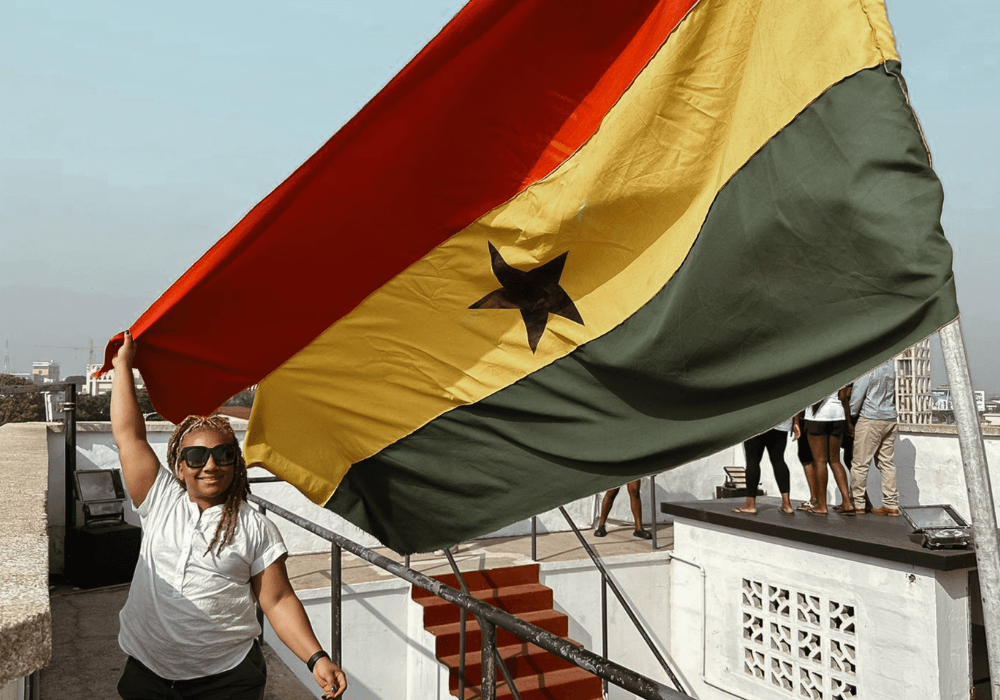
Let us begin with the honest answer: yes. If you are wondering, 'Is Ghana safe to travel to?', it is. Ghana is one of the safest, most stable, and most welcoming countries in West Africa and one of the most consistently well-regarded destinations on the entire continent for international visitors.
But we understand why you may ask. For diaspora travelers raised on decades of Western media narratives about Africa, narratives that have too often reduced an entire continent to images of conflict, poverty, and danger, the question is not simply logistical. It is the surfacing of a fear that was placed there by forces that had every reason to keep the diaspora at a distance from the land that shaped them.
This guide will give you the full, honest picture. Not a sales pitch. Not a dismissal of your concerns. The truth, with context about whether Ghana is safe to travel to.
Ghana's Safety Record
Ghana consistently ranks as one of the most politically stable countries in Africa. It has held peaceful, competitive democratic elections without interruption since 1992, with power transferring peacefully between opposing parties multiple times, a record that many established democracies in the world would be proud of.
The Global Peace Index consistently ranks Ghana among the most peaceful nations in sub-Saharan Africa. The country has no history of civil war. It does not share borders with active conflict zones. Most major travel advisories, including those issued by the UK, US, Canada, and Australia, characterize Ghana's security situation as generally stable and safe. Standard precautions are recommended for Accra's urban areas, as with any major city in the world."
Over one million visitors came to Ghana during the Year of Return in 2019. Hundreds of thousands more have followed in every year since. The overwhelming majority return home with accounts of warmth, welcome, and safety. For these reasons, Ghana is frequently cited among the safest African countries to travel to.
Is Ghana Safe for Black Travelers Specifically?
This is a question that deserves a direct answer, because the safety concerns of Black travelers are not the same as those of all international visitors. According to a study that analyses the travel habits of black travelers, 79% of Black travelers cite safety and a welcoming atmosphere as highly influential in their travel decisions. They make travel decisions not because they are timid, but because they have learned through experience that welcome cannot be assumed.
In Ghana, the answer is not just that it is safe, it is that it is welcoming in ways that diaspora travelers rarely experience elsewhere. The Ghanaian government's Year of Return and Beyond the Return initiatives have been explicitly designed to make the diaspora feel not merely tolerated but celebrated. Many diaspora travelers report that Ghana is one of the first places they have ever travelled to where their Blackness was not a source of anxiety but of connection.
This is not to say that Ghana is without complexity. No country is. But the experience of walking through Accra as a Black diaspora visitor, being greeted, being seen, and sometimes being recognized as family returning, is profoundly different from the experience of travel in much of the Western world.
Read more about how to plan a trip to Ghana.
What to Be Aware Of Before Traveling to Ghana
An honest safety guide acknowledges both the reassuring reality and the genuine considerations that any thoughtful traveler should be aware of.
Road Safety
Road safety is perhaps the most significant practical safety consideration for visitors to Ghana. Roads outside major urban areas can be challenging, particularly at night and during the rainy season. Travelling in a well-maintained vehicle with an experienced local driver, as Protour Africa arranges for all our travelers, significantly reduces this risk. We do not recommend independent driving, especially for first-time visitors.
Health Considerations
Ghana is in a malaria-endemic zone, and taking appropriate prophylaxis is strongly recommended. A yellow fever vaccination certificate is required for entry. Consulting a travel health clinic at least six weeks before departure will ensure you have the right vaccinations and medications in place. Accra has quality private healthcare facilities, and international health insurance is advisable.
Water and Food Safety
Tap water in Ghana is not recommended for drinking. Bottled water is widely available and inexpensive. Food safety at established restaurants and hotels is generally good. Street food can be excellent and safe, especially when it is freshly prepared and popular with locals, but exercising judgement and starting slowly if your stomach is not accustomed to the cuisine is sensible.
Petty Crime in Urban Areas
As in any major city anywhere in the world, opportunistic petty crime, pickpocketing, bag snatching, and phone theft occur in busy urban areas of Accra and Kumasi. The precautions are the same as in London, New York, or Paris: be aware of your surroundings in crowded markets and transport hubs, keep valuables secure, and avoid unnecessarily displaying expensive items.
LGBTQ+ Travelers
Ghana's legal and social landscape for LGBTQ+ individuals is conservative, and same-sex relationships are not legally recognized. LGBTQ+ travelers are advised to exercise discretion and to research the current situation carefully before travel. We take the safety and dignity of every traveler seriously, and we encourage open conversations with our team about any concerns before booking.
Addressing the Fear Beneath the Question
We want to speak to something deeper than logistics, because we know that for many diaspora travelers, the safety question is not just about pickpockets and road conditions. It is about a deeper fear that has been shaped by generations of narratives designed to keep you away.
The old story says: Africa is dangerous. Africa is foreign. Africa is not for you. You do not belong there. You will not be safe.
The truth that hundreds of thousands of diaspora travelers have discovered by actually going is different. Ghana is welcoming. Ghana is safe. Ghana is ready. And for many, standing on Ghanaian soil for the first time, the thing they feel is not fear. It is recognition.
We understand that the question 'Is Ghana safe?' can be a proxy for a deeper question: 'Is this journey safe for me emotionally, spiritually, personally?' Our answer to both is yes. And we will be with you every step of the way to make sure of it.
How Protour Africa Ensures Your Safety and Comfort
Knowing that Ghana is safe is one thing. Feeling safe from the moment you land is another. This is where travelling with a culturally grounded, community-rooted guide makes the difference.
Private, vetted transfers: we arrange all ground transportation in well-maintained vehicles with experienced drivers who know the country's roads intimately. You are always supported.
Carefully selected accommodation: every accommodation in our itineraries is vetted for quality, safety, and location. We do not send you somewhere we have not been ourselves.
Community-rooted relationships: our guides and community partners have deep, long-standing relationships in every location we visit. You are not a tourist walking into unfamiliar territory. You are a guest being received.
Pre-travel preparation: before you travel, we provide you with comprehensive, honest information about what to expect practically, culturally, and emotionally. Knowledge is safety.
On-the-ground support: Throughout your journey, you have direct access to our team. We are reachable and responsive. You are never on your own.
Conclusion
Ghana is safe to travel to. It is also historically rich, culturally alive, and ready to receive you as the family you are. The practical considerations in this guide will help you prepare. But the most important preparation is the decision to go.
We have walked this path with many travelers who arrived with the same questions you are carrying. Every one of them will tell you the same thing: the only regret was not going sooner.
When you are ready, Protour Africa is here. Get in touch with us
Q&A
Question: Is Ghana safe to travel to?
Answer: Yes. Ghana is widely regarded as one of the safest and most stable countries in West Africa. Since 1992, it has held peaceful, competitive elections with multiple transfers of power, has no history of civil war, and does not border active conflict zones. More than a million people visited during the 2019 Year of Return, and the overwhelming majority reported warmth, welcome, and safety.
Question: What are the main day-to-day safety considerations, and how can I manage them?
Answer: Road safety and petty crime are the key practical considerations. Roads outside major cities can be challenging, especially at night and during the rainy season, so first-time visitors are advised not to self-drive; traveling in a well-maintained vehicle with an experienced local driver (as Protour Africa arranges) significantly reduces risk. In busy areas of Accra and Kumasi, opportunistic theft (pickpocketing, bag snatching, phone theft) can occur; use the same common-sense precautions you would in London, New York, or Paris: stay aware in crowded places, keep valuables secure, and avoid displaying expensive items unnecessarily.
Question: What health requirements and precautions should I plan for?
Answer: A yellow fever vaccination certificate is required for entry, and malaria prophylaxis is strongly recommended. Consult a travel health clinic at least six weeks before departure to ensure you have appropriate vaccinations and medications. In-country, avoid drinking tap water; bottled water is inexpensive and widely available. Food at established restaurants and hotels is generally safe; street food can be excellent when freshly prepared and popular with locals. Ease in gradually if your stomach isn’t yet accustomed. Accra has quality private healthcare facilities, and international health insurance is advisable.
Question: Is Ghana safe and welcoming for Black diaspora travelers?
Answer: Yes, beyond safety, many Black travelers find Ghana uniquely welcoming. Government initiatives like the Year of Return and Beyond the Return were designed to celebrate the diaspora, and many visitors describe feeling recognized and embraced rather than scrutinized. While Ghana, like any country, has its complexities, the experience of being greeted and seen in Accra is often profoundly different from travel in much of the Western world.
Question: What should LGBTQ+ travelers know before visiting Ghana?
Answer: Ghana’s legal and social environment is conservative, and same-sex relationships are not legally recognized. LGBTQ+ travelers should exercise discretion and research the current situation carefully before travel. Protour Africa takes the safety and dignity of every traveler seriously and encourages open conversations about concerns prior to booking so we can advise and support you appropriately.

Date-Jul 2026 & Jul 2027 Number of days-10 days
This tour is curated for guests seeking the deep continuity of their Pan-African heritage. Rather than beginning with the immediate emotional weight of the coastal dungeons, this journey starts at the northern trade routes, where it all began. Follow with participation in the PANAFEST festival and conclude with the natural majesty of the Volta Region of Ghana.