
What to Pack for Your Heritage Journey to Ghana
Packing for Ghana is not like packing for any other trip you have taken. Yes, there is a practical list that features the documents, medications, and the right fabrics for the heat. That part of this guide will give you everything you need.
But a Ghana packing list for a heritage journey carries something extra that no standard travel checklist addresses. Because you are not just packing a suitcase. You are preparing yourself, your body, your spirit, and your emotional readiness for an experience that may change you in ways you cannot fully anticipate.
This blog post covers both dimensions. It will tell you precisely what to pack for Ghana in practical terms. And it will also help you think about what to bring from the inside. The openness and intentionality that will make your Ghana heritage journey as deep and transformative as it is meant to be.
What is Ghana’s Weather Like?
Ghana is a tropical country on West Africa's Gold Coast. It is warm all year round. But its two distinct seasons should directly shape what goes into your bag.
The Dry Season (October to March) is the most popular time for heritage travel. Temperatures sit between 25°C and 35°C (77°F to 95°F). From December to February, the Harmattan wind blows in from the Sahara, which is dry, dusty, and hard on the skin and lips. Pack lip balm, heavy moisturizer, and a light scarf for the dustiest days.
The Rainy Season (April to September) brings heavier humidity and rainfall, particularly in the south between April and June. Temperatures are slightly cooler, but the air is thick. You will need a compact rain jacket and fast-drying fabrics.
Ghana is mostly warm, which is usually a plus for diasporan travelers. You will never need a heavy coat. But you will need breathable fabrics, sun protection, and season-specific additions depending on when you travel.
Read more about the best time to visit Ghana
Ghana Packing List
1. Documents and Pre-Departure Essentials
This section of your packing list for Ghana is non-negotiable. Confirm and pack these before anything else.
Passport and Ghana Visa
Must be valid for at least six months beyond your travel dates. Carry a photocopy stored separately from the original.
Requirements depend on your nationality. Many diaspora travelers from the US, UK, Canada, and the Caribbean require a visa. Apply for your e-visa through the Ghana Immigration Service well in advance.
Yellow Fever Vaccination Certificate
Ghana requires proof of yellow fever vaccination for entry. You will be asked for your International Certificate of Vaccination, the yellow card, at immigration in Accra. Travelers without it have been turned away at the border. The vaccine must be administered at least ten days before arrival. Get this done early and keep the yellow card with your travel documents at all times.
Travel Insurance and Emergency Contacts
Ensure your policy covers medical evacuation. Healthcare facilities outside of Accra can be very limited.
Prepare a document with your accommodation details, your home country's embassy or consulate in Accra, your insurer's emergency line, and your travel insurance policy number. Store it separately from your main documents. Ghana's emergency services number is 211.
2. Health and Malaria Prevention Kits
Ghana is a healthy destination when you are prepared. The travelers who come home unwell are almost always those who skipped this section.
Malaria Prevention Medications
Malaria is present in all regions of Ghana, all year-round, with no exceptions. The most common option for short-term visitors is atovaquone-proguanil, begin one to two days before arrival. Start your antimalarial on schedule before you land.
Insect Repellent
Pack a DEET-based repellent at 30–50% concentration. Apply it each evening when mosquitoes are most active.
Personal First Aid Kit
Medical facilities outside Accra are limited. Bring your own kit, including adhesive plasters, antiseptic wipes and cream, antidiarrheal medication, oral rehydration salts, antihistamines, ibuprofen, paracetamol, a digital thermometer, and hand sanitizer. Traveler's diarrhea affects a significant proportion of visitors to West Africa; do not leave this preparation out.
Other Vaccinations
Your travel doctor may recommend updating your Hepatitis A and Typhoid vaccinations alongside the mandatory yellow fever shot. Discuss your full vaccination needs well before departure.
3. Clothing
Getting your clothing right means staying comfortable in the heat, respecting Ghana's cultural dress expectations, and having the right garments for the varied moments of your heritage journey.
Light, Breathable, and Modest Clothing
Cotton and linen are your best fabrics. Synthetics trap heat and sweat. Ghana is also a culturally conservative country hence, modesty in dress is a mark of respect. Pack clothing that covers your shoulders and knees for most occasions, particularly at markets, heritage sites, churches, and community meetings.
For women: lightweight cotton dresses below the knee, loose trousers, cotton blouses with sleeves, and a light wrap or sarong. For men: lightweight cotton trousers or chinos, short-sleeved shirts, and one pair of smart trousers for formal occasions.
Heritage Site Clothing
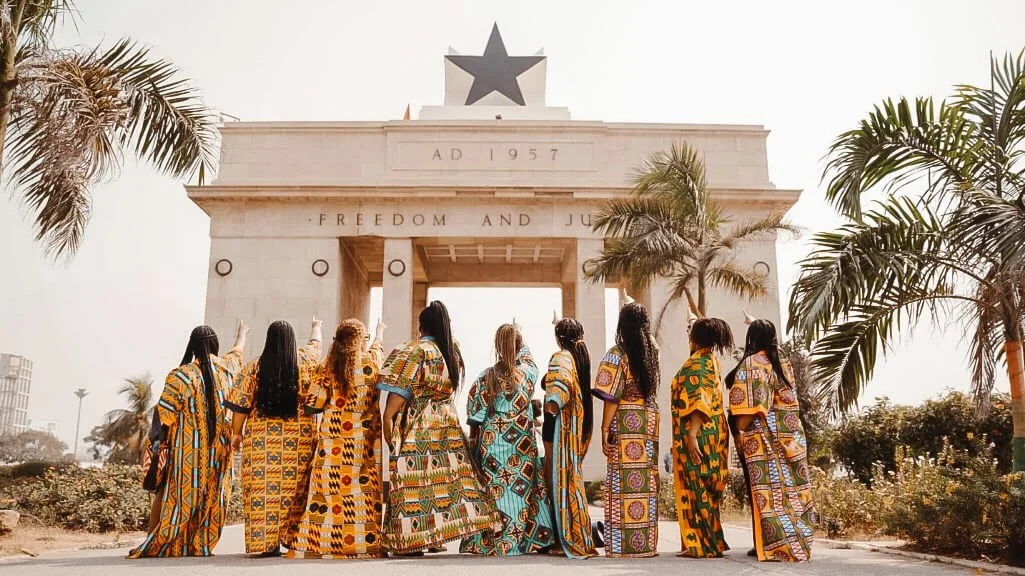
Pack one outfit specifically for visiting Cape Coast Castle and Elmina. Many diaspora visitors choose to wear white, the color of spiritual purity and ancestral connection. Others choose Kente or Adinkra as an act of cultural reclamation. Dress as you would for a sacred occasion. Because that is exactly what it is.
Footwear
Broken-in walking shoes for heritage sites and markets. Flip-flops for beach and casual evenings. One pair of formal sandals or shoes for ceremonies and dinners. Don’t forget hiking shoes if you intend to explore that during your visit to Ghana.
4. Toiletries and Personal Care
Sunscreen
The West African sun is powerful year-round. Pack SPF 50 and apply it daily. Sunscreen is available in Ghana, but it can be expensive and hard to find in your preferred formulation.
General Toiletries
Most standard toiletries are available in Ghana's cities. Pack travel-sized amounts for the first few days and resupply locally. Bring specialist hair care products you rely on; these may be harder to find in your preferred formulation.
Haircare and Skincare
During the Harmattan season, pack a rich moisturizer and apply body lotion twice daily. The dry, dusty air will challenge your skin quickly.
Ghana's salons and braiders are world-class and genuinely affordable. Having your hair styled in Ghana is one of the most joyful cultural experiences your heritage journey can offer. If you prefer to manage your own hair, bring the specialist products you rely on, particularly for natural hair textures.
5. Technology and Electronics
Your Phone
Download offline maps using Google Maps or Maps.me before you travel, as internet connectivity is inconsistent outside major cities. Purchase a local SIM card from MTN, Vodafone Ghana, or AirtelTigo on arrival. Local data is far cheaper than international roaming.
Power Adapters
Ghana uses the UK three-pin socket (Type G). Bring at least two plug adapters. A travel surge protector with USB ports allows you to charge multiple devices and protects against power fluctuations.
Power Bank
Power outages, known locally as "dumsor," can still occur. A high-capacity power bank of at least 20,000 mAh will keep your devices running through any interruptions.
Camera
Ghana is visually extraordinary. You can pack a camera, extra memory cards, and spare batteries. Always ask permission before photographing people. Photography is prohibited inside the dungeons at Cape Coast Castle and Elmina Castle; respect this fully. These are sacred spaces.
6. Money and Finance
Ghana's official currency is the Ghana Cedi (GHS). Always check the current exchange rate before your trip, as the Cedi has depreciated significantly in recent years. Ghana is largely a cash-based economy for daily spending. Cards are accepted at upscale hotels and malls in Accra, but cash is essential for markets, transport, street food, and purchases from local artisans.
ATMs in Accra, Cape Coast, and Kumasi accept Visa and Mastercard. Reliable banks include Stanbic, Standard Chartered, Ecobank, and GCB. There are ATMs in the arrivals hall at Accra International Airport. You can withdraw Cedis immediately on arrival.
Before heading to Cape Coast, Elmina, or Kumasi, withdraw enough cash in Accra. These areas are far more cash-dependent than the capital.
Carry a small amount of USD as a backup. Exchange it at licensed forex bureaus, Osu in Accra has several with competitive rates. Avoid street money changers, who may offer poor rates or counterfeit notes. You can use a flat money belt worn under your clothing to carry your passport, cards, and larger amounts of cash safely in busy market environments.
7. Ghana Heritage Journey Essentials
This is the section most travel guides leave out. For the heritage traveller, it is the most important.
A Physical Journal
Pack a paper journal, not a notes app. Your Ghana heritage journey will bring you moments that deserve more than a photograph and more than a caption. The dungeons of Cape Coast Castle. A shared bowl of fufu with people who call you family before you have exchanged ten words. Kente is woven by hands that have done this for a lifetime. Write these moments down, for yourself, and for the people who come after you.
A Meaningful Gift from Home
Bring something small to leave with the families, communities, or cultural guides who host you. Not sweets for children or cheap mass-produced items. Something that represents where you come from like a book, a handmade item, something that says: I brought a piece of my world to share with you.
Your Ancestry Research
If you have done DNA testing, genealogical research, or gathered family oral history connecting you to a specific ethnic group or region in Ghana, bring it and print it out. Your guide, your hosts, and the communities you meet may be able to contextualise it, add to it, and connect it to local history in ways that will deepen your journey immeasurably.
An Open Heart
Ghana will not always run on your schedule. Roads take longer than the map suggests. Plans change. The unexpected is frequent. The travellers who are transformed are those who arrive with enough patience to let the journey be what it needs to be. Pack that above everything else.
Conclusion
There is a moment before you zip your bag shut, after you have checked off the list, when the journey becomes real. You are going. You are actually going. And we hope this Ghana packing list has gotten you more than ready.
Whatever brought you to this point, pack well, prepare thoroughly, and then let go of the list. Because what Ghana will give you cannot be planned for. It can only be received by someone who arrives open to what the land has been waiting to say. Ghana is open to those who are eager to receive what the people will offer, and to discover what, somewhere deep inside yourself, you have always known was there.
Ghana has been waiting. You are almost ready.

Date-Jul 2026 & Jul 2027 Number of days-10 days
This tour is curated for guests seeking the deep continuity of their Pan-African heritage. Rather than beginning with the immediate emotional weight of the coastal dungeons, this journey starts at the northern trade routes, where it all began. Follow with participation in the PANAFEST festival and conclude with the natural majesty of the Volta Region of Ghana.