
Naming Ceremony in Ghana: A Guide for Those Returning Home
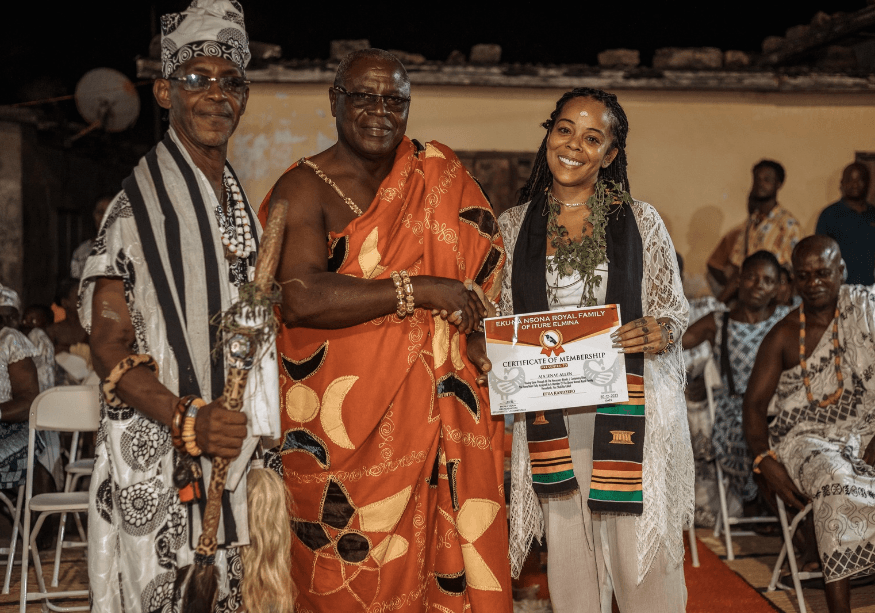
There's a moment that happens in almost every naming ceremony we've hosted. A guest, usually someone who flew fourteen hours to be here starts crying before the elder even says a word. Not because anything sad is happening.
Because for the first time, someone is standing in front of them, in Ghana, saying: you have a name here, and it is yours.
That's what this Ghana naming ceremony experience does. It's one of the oldest traditions in Ghana, and one of the most meaningful things a returning guest can be part of.
Here's everything you need to know about it ; what it actually is, what happens, and how you can be part of one yourself.
What Is a Ghanaian Naming Ceremony?
In Ghana, a naming ceremony is known traditionally as an Outdooring. It is called Kpodziemo among the Ga, Abadinto among the Akan, and Vihehedego among the Ewe. The word "outdooring" comes from the literal meaning of the ceremony: bringing a newborn "outdoors" for the first time to formally introduce them to family, community, and the wider world.
Traditionally, the ceremony takes place on the eighth day after a child is born. Before that day, the baby stays indoors, and in many communities is considered a visitor rather than a permanent member of the family. Waiting eight days reflects an old belief: once a child has survived this first stretch of life, they are here to stay, and it's time to give them a name and welcome them properly.
Names in Ghana carry real weight. Many people receive a day name which is a name tied to the day of the week they were born. Alongside a name chosen for an older relative, living or passed on. A name isn't just a label here. It's a connection to a specific day, a specific ancestor, a specific place in the family line.
For returning family from the diaspora, this tradition has taken on a second meaning. Increasingly, guests coming home to Ghana are given the chance to go through a version of this same ceremony themselves . Not as infants, but as adults finally being welcomed, by name, into a place many have spent years wondering if they'd ever call home.
What Actually Happens During a Naming Ceremony in Ghana
A real naming ceremony is not a performance. It follows a structure that's been passed down for generations, and every part of it means something.
It usually happens early, often at dawn or in the early morning, in keeping with tradition. Family and community members gather. The more people present, the more meaningful the welcome.
An elder leads the ceremony. This is not a role handed to just anyone. The elder speaks blessings over the person being named, calls on ancestors, and formally announces the name being given.
There's a water and drink ritual**.** In many traditions, the elder touches a drop of water to the person's lips, followed by a drop of a local drink, often akpeteshie, a traditional gin, or in some regions a mixture of corn flour and water. The water represents truth and purity. The drink represents the bitterness that life sometimes brings. Together, they're a way of saying: may you always tell the truth, even when it's hard.
The name is spoken aloud, publicly, often multiple times, so that everyone present hears it clearly.
Drumming, singing, and dancing follow. This is not a quiet or solemn ceremony. Once the name is given, it becomes a celebration. Among the Ewe, ceremonies can include traditional dance performed specifically to welcome and protect the new arrival. Among the Ga and other coastal groups, the drumming carries its own rhythm meant to announce the news to the wider community.
Every ethnic group in Ghana has its own version of this . Akan, Ga, Ewe, Dagbani, and others, each bring their own specific customs but the heart of it stays the same everywhere. A name given publicly, blessings spoken over you, and a community that shows up to witness it.
A few regional differences worth knowing:
Among the Ewe, ceremonies are sometimes held outdoors under a significant tree, often a baobab or mahogany. It is considered a space where ancestors are close by. Drumming and dance are central, and the rhythms used carry their own meaning tied to protection and strength.
Among the Ga and Dangme communities along the coast, water plays an especially strong symbolic role, poured out at dawn as part of the blessing, alongside the water-and-drink ritual described above.
In Northern Ghana, naming traditions often blend indigenous customs with Islamic prayer, combining Arabic blessings with the same core structure of public naming, drumming, and communal celebration.
None of these variations are better or more "authentic" than another. They're simply different expressions of the same underlying belief: that a name is a serious thing, and giving one deserves real ceremony.
Which of these tribe's naming ceremony would you like to experience?
What the Naming Ceremony in Ghana Means to Those returning Home
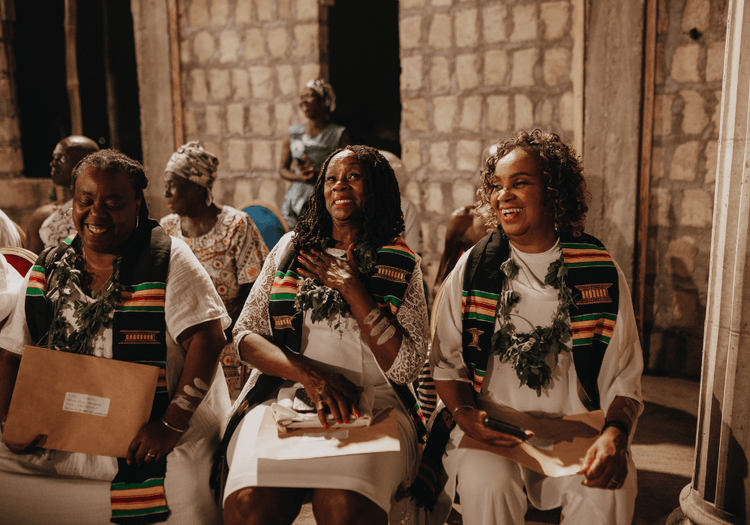
Guests at a Ghana Naming Ceremony
For a Ghanaian family, an Outdooring welcomes a new baby into a name they'll carry their whole life. For returning family from the diaspora, it means something else entirely and often something bigger than people expect going in.
Many guests come to Ghana already carrying questions they've held for years. Who were my people? Do I have a place here? Is this actually my story, or am I just visiting someone else's?
A naming ceremony answers a piece of that, directly and out loud. An elder stands in front of you, gives you a name rooted in this land, and speaks it over you the same way it would be spoken over any child born here. It's not symbolic in a small way but it's a real tradition, done the real way, extended to you specifically.
This is why we don't treat it as an "add-on" activity. It's one of the most requested parts of the experience, and one of the moments guests talk about most once they're home. Some guests cry. Some laugh through the whole thing. A few have said it's the first time in their life someone told them, out loud, exactly where they belong.
You don't need to trace your lineage to a specific village or prove a genetic connection to be part of this. If you feel the pull to be here, that's enough. The ceremony isn't gatekept, it's opened.
This is also part of a much bigger, ongoing story. Ghana has spent years actively inviting the diaspora home. Through initiatives like the Year of Return and the continuing Beyond the Return campaign. When a Ghanaian elder gives a returning guest a name, it isn't a favor being done for a tourist. It's a country reaching back toward people it has always considered its own, even across generations and oceans of separation.
How to Participate in a Naming Ceremony in Ghana
If you're planning a trip and want this to be part of it, here's what you should know.
It's arranged, not improvised
A real naming ceremony involves a real elder and real family or community members . This takes planning ahead of time, not a same-day request. When you travel with hosts who have genuine relationships in the community (not a script handed to a random tour guide), this gets arranged properly and respectfully.
You'll likely be asked a few questions beforehand
You will be asked your birth details, sometimes your family background if you have it, and what kind of name or meaning you're hoping to carry. This helps the elder choose something that fits you specifically, not a generic name given to every visitor.
Dress matters, but doesn't need to be complicated
Many guests choose to wear traditional cloth for the occasion. This can usually be arranged locally, and your hosts can help you find something appropriate rather than showing up in something purchased for a costume.
Bring people who matter to you
If you're travelling with family or close friends, this is a ceremony worth having them present for. It's communal by nature, the more people witnessing your name being given, the closer it feels to the real thing.
Give yourself space afterward
This ceremony brings up a lot for people, often more than they expect. Don't schedule something immediately after that requires you to be "on." Let the morning breathe.
Think about where it falls in your trip
Many guests choose to have their naming ceremony early on, so the name and the sense of welcome it brings can settle in before other heritage moments later in the trip. Others prefer it later, once they've had a few days to acclimate. Either can work. Talk it through with your hosts when you're planning the trip so it lands at the right point for you.
Know that it's real, not staged
A genuine naming ceremony involves real elders giving up real time from their day, real family members showing up to witness, and real tradition being followed exactly as it would be for a Ghanaian newborn. That's the whole point, it should never feel like a reenactment performed for visitors.
Conclusion
We've watched a lot of Ghanaian naming ceremonies happen, and a few things come up again and again in what guests tell us afterward.
Guests often say they didn't expect to feel emotional and then found themselves in that state, standing there while an elder spoke their name for the first time. Others describe a strange, settling kind of calm, like something they didn't know was unresolved finally clicked into place.
One guest described it simply: she'd spent years being asked "where are you really from" and never having a good answer. After her ceremony, she said, she finally had one.
That's really what a naming ceremony experience in Ghana offers. Not a performance, not a photo opportunity but a real, old, communal way of saying; you belong here, and now you have a name to prove it.
Common Questions About Naming Ceremonies in Ghana for Diasporans
Do I need to know my exact ancestry to have a ceremony? No. Many guests come with detailed family research, and just as many come with none at all. Both are welcomed the same way.
Will I get to keep the name? Yes, it's yours. Many guests use it as a middle name going forward, have it added to jewelry or artwork, or simply carry it privately as something that belongs only to them and that morning.
Is this only for people who are certain about their Ghanaian heritage? Not at all. This ceremony has been extended to guests from across the diaspora . The Caribbean, the Americas, the UK, and beyond regardless of exactly where their family's story runs through. If you carry Africa in your blood, your bonds, or your belief, there's a place for you in this.
How long does the ceremony take? It varies, but plan for it to take a full morning once you include the ceremony itself, the celebration afterward, and the time you'll want simply to sit with what just happened.
Can family members who aren't of African descent attend? Yes. Partners, friends, and family members are welcome to be present and to witness the ceremony alongside you.
If you're thinking about coming home to Ghana and want a naming ceremony to be part of your trip, we'll help arrange it with real elders and real community. Not a version made for a camera.
Come with an open heart. We'll take care of the rest.
Get in touch with Protour Africa when you are ready.

Date-Jul 2026 & Jul 2027 Number of days-10 days
This tour is curated for guests seeking the deep continuity of their Pan-African heritage. Rather than beginning with the immediate emotional weight of the coastal dungeons, this journey starts at the northern trade routes, where it all began. Follow with participation in the PANAFEST festival and conclude with the natural majesty of the Volta Region of Ghana.