
Tours in West Africa: A Guide to Ghana, Benin and Beyond
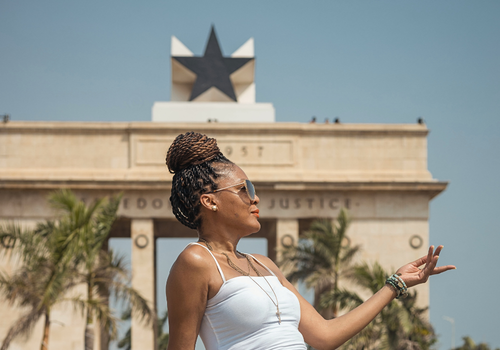
West Africa is one of the most visited places in Africa when it comes to ancestral reconnection and homecoming. And we can’t have a conversation about tours in West Africa without mentioning Ghana and Benin.
Ghana and Benin sit less than a day's travel apart, and each destination holds a different piece of a larger story. It’s a one that many of us are only now getting the chance to walk through in person.
If you're weighing tours in West Africa and wondering how the region fits together, this blog post is for you. You will discover the best way to take a journey to West Africa and what to expect.
Why West Africa Is Calling Ghana and Benin as a Combined Homecoming
Ghana
Ghana has spent the last several years building a reputation as the entry point for diaspora travel to the continent, and for good reason. Its English-language accessibility, established tourism infrastructure, and deep historical sites make it a natural first stop for many travelers exploring their roots. Ghana is one country along the coastline that shaped the transatlantic story, and Benin, its neighbor a short flight or drive away, holds an equally significant piece of that history.Cape Coast Castle, Elmina Castle and Assin Manso are some of the most visited heritage sites.
Learn about what to expect at these Ghana heritage sites in this blog.
Benin
Benin's coastal town of Ouidah was one of the major departure points of the transatlantic slave trade, and the country has spent recent years investing heavily in telling that history clearly and directly. The Door of No Return in Ouidah, a striking memorial arch built on the beach was constructed for the UNESCO Slave Route project.
It has become one of West Africa's most visited heritage landmarks, drawing visitors from the Caribbean, the United States, and Brazil who come specifically to walk the same ground their ancestors were forced to leave. Some travelers describe walking through the arch in both directions as a way of symbolically returning and reclaiming a path that once only led one way.
Read about the Door of No Return in Ouidah in this blog
Pairing Ghana and Benin on a single trip gives you a fuller picture: Ghana's castles and coastal forts tell one part of the story, and Ouidah's memorial and museums tell another. Beyond the history, each country offers its own living culture, Ghana's markets, music, and food; Benin's Vodun traditions, textile arts, and coastal towns.
For travelers who want more than a single stop, a combined West Africa trip is becoming one of the most requested experiences we hear about.
What a Small, Intimate Tour to Ghana Actually Looks Like
If Ghana is your starting point and for most diaspora travelers, it is a well-built trip balances a few different kinds of days. It isn't a checklist of monuments; it's a rhythm of history, culture, food, and rest, built for a small circle of travelers rather than a large tour bus.
A typical Ghana-based trip includes time in Accra for markets, food, and city life; a day or two on the coast for Cape Coast Castle, Elmina Castle, and Kakum National Park's canopy walk; and, depending on the trip, time inland toward Kumasi for Ashanti cultural sites and kente-weaving villages like Bonwire. Homes-style meals, visits with local families, and time with hosts who can explain the context behind what you're seeing matter as much as the sites themselves.
The difference between a tour and a trip that actually feels like coming home often comes down to who's guiding you and how much room there is to ask questions, sit with what you're feeling, and slow down when something hits harder than expected.
Group size matters here too. A trip built around a small, intimate circle rather than a large tour group changes the entire feel of a heritage visit. For such trips, there's more room for real conversation with hosts, less rushing between stops, and a pace that respects the emotional weight some parts of the trip can carry.
Tours to Benin: Ouidah, the Door of No Return, and Vodun Heritage
A Benin add-on typically centers on Ouidah, a coastal town about 25 miles from the capital, Cotonou. The town has become the heart of Benin's push to reconnect its history, culture, and heritage with the wider world, and it offers a noticeably different experience from Ghana's fortified castles.
The Door of No Return stands nearly 56 feet tall on Ouidah's beach, its ochre-and-gold facade carved with figures representing those taken from the port during the slave trade. Nearby, a life-size replica of a historic sailing ship, one of the vessels that once carried people from Ouidah across the Atlantic. It has become part of an immersive museum experience recounting that history in detail. Walking this stretch of coastline is a different kind of encounter than visiting a castle dungeon; it's open, exposed, and quiet in a way that gives space for reflection.
Ouidah is also known as the center of Vodun (often called Voodoo outside West Africa), one of the region's major traditional belief systems. It is also the root of related practices found throughout the Caribbean and Latin America, including Haitian Vodou, Brazilian Candomblé, and Cuban Santería. The Sacred Forest of Kpasse, an old-growth grove in the center of town, is lined with sculptures representing figures from Vodun tradition, created by respected Beninese artists. The town's Python Temple offers a look at another local tradition tied to Vodun beliefs, with guides on hand to explain the meaning behind what you're seeing rather than presenting it as a spectacle.
Beyond Ouidah
Benin also hosts an annual multi-day festival celebrating Vodun culture through dance, mask parades, and traditional ceremony, drawing large numbers of visitors.
If your travel dates can align with it, it's one of the more vivid ways to experience Benin's living culture rather than only its historical sites.
For diaspora travelers of Haitian, Jamaican, Brazilian, Cuban, or African-American heritage in particular, many describe Ouidah as one of the more emotionally resonant stops on a West Africa trip. It is a place where the through-line between West African tradition and diaspora culture across the Americas becomes visible and personal.
Beyond Ouidah, Benin's investment in its heritage sites has grown substantially in recent years, with new museum spaces and restored monuments continuing to open along the coast. Guides in Ouidah are typically well-versed in both the historical record and the living cultural traditions still practiced today, which means a visit here tends to feel like an ongoing conversation about history rather than a static museum tour.
Planning a Multi-Country West Africa Trip That Feels Like Coming Home
If you're weighing a combined Ghana-and-Benin trip, a few practical points make the planning easier:
Timing
Most combined trips run Ghana first, then Benin, or the reverse, connected by a short flight (roughly an hour) or an overland route through Togo, depending on time and comfort with border crossings. Ten to fourteen days gives enough room to experience both countries without feeling rushed, though shorter combined trips are possible if Benin is limited to a few focused days around Ouidah.
Documentation
Entry requirements differ by country and change from time to time, so this is one area where checking current, official guidance before booking matters more than anything else. Ghana currently requires a visa arranged in advance for U.S. citizens (more on that in our full guide to Ghana's entry requirements), while Benin has its own visa process for U.S. travelers.
Both countries require proof of yellow fever vaccination for entry, so build that into your planning timeline early. Note that the certificate only becomes valid ten days after vaccination.
Pacing
The emotional weight of heritage sites in both countries is real, and it's worth building rest days and lighter cultural experiences like markets, food and music around the heavier stops rather than stacking historical sites back to back. A trip that moves too fast can leave you seeing everything and absorbing very little.
Who you travel with
A multi-country trip benefits enormously from hosts who know both countries well and can offer real context at each stop, rather than a generic tour script. The value isn't just logistics. It's having someone who can answer the questions that come up in the moment, translate what you're seeing into something meaningful, and hold space for what the trip brings up.
Budget
Combined trips naturally run longer and involve more moving pieces than a single-country visit, so costs typically include two sets of entry fees, an internal flight or ground transfer between countries, and accommodation in both. Building a rough budget early and being upfront with whoever is planning your trip about what matters most to you, makes for a smoother planning process than adjusting everything after the fact.
Connectivity
Both countries have reasonably reliable mobile networks in major cities, and local SIM cards are inexpensive and easy to pick up on arrival. Staying connected matters more than usual on a multi-country trip, both for logistics and for sharing the experience with family back home as it happens.
Culture, Food, and Music Across Ghana and Benin
Beyond history, Ghana and Benin offer genuinely different everyday cultures worth experiencing side by side. Ghana's food scene centers on dishes like jollof rice, waakye, banku with tilapia, and red-red, often eaten family-style with hands and shared plates, a meal in Ghana is rarely a solo affair. Highlife and Afrobeats fill the airwaves in Accra, and live music venues across the city offer everything from traditional drumming to contemporary Afrobeats acts.
Benin's food leans on similar West African staples such as cassava, plantain, and grilled fish. it has its with its own French-influenced twist from the colonial period, alongside dishes specific to Beninese and Fon culture. Music and dance in Benin are closely tied to Vodun tradition, with drumming and movement forming part of ceremonial practice rather than sitting apart from it. Traveling between the two countries gives you a chance to hear how rhythm, food, and tradition shift.
Language is another point of contrast worth preparing for: Ghana's official language is English, which makes day-to-day communication straightforward for most diaspora travelers, while Benin's official language is French, alongside local languages like Fon and Yoruba. A guide or host who's comfortable moving between English and French makes a real difference once you cross into Benin.
Togo: A Natural Bridge Between the Two
For travelers building a longer, more ambitious multi-country trip, Togo sits geographically and culturally between Ghana and Benin, and some tours use it as a connecting stop rather than a border to pass through as quickly as possible.
Togo shares some of the same Vodun traditions found in Benin and offers its own coastal towns and markets worth a day or two of exploration. It's not a required stop, but if your trip has the time built in, it can round out the regional picture rather than treating Ghana and Benin as two disconnected legs of a single journey.
Frequently Asked Questions
Do I need separate visas for Ghana and Benin?
Yes. Ghana and Benin have separate immigration systems, and U.S. citizens typically need to arrange entry documentation for each country individually before travel. Requirements can change, so confirming current rules with each country's official immigration channels close to your travel dates is the safest approach.
How long should a combined Ghana and Benin trip be?
Most travelers find ten to fourteen days gives enough time to experience both countries without rushing. Shorter trips are workable if you're willing to focus Benin around Ouidah specifically rather than a broader regional tour.
Is Benin safe for diaspora travelers?
Benin welcomes a steady flow of international and diaspora visitors each year, particularly around Ouidah and its cultural festivals. As with any international trip, it's worth checking current travel advisories and traveling with hosts who know the region well.
Can I visit Benin without also going to Ghana?
Absolutely, some travelers choose to focus a trip entirely on Benin, particularly if their family history or interest points there specifically. Ghana and Benin work well together, but neither one requires the other.
What's the best time of year for a combined West Africa trip?
Ghana and Benin share a similar climate pattern, with drier stretches roughly from November through March making for more comfortable travel and easier outdoor time at heritage sites. December carries its own draw for diaspora travelers, with Ghana's homecoming season in full swing. Outside of the drier months, both countries are still very much visitable; just expect more frequent rain showers, particularly from April through June.
Is French required to enjoy Benin as an English-speaking traveler?
Not if you're traveling with hosts or guides who can bridge the language gap, which most well-organized tours account for. It's still worth learning a handful of basic French phrases likegreetings and thank-yous go a long way but you won't need fluency to have a meaningful visit.
Conclusion
Tours in west Africa that spans Ghana and Benin isn't about covering more ground for its own sake. It's about understanding that the story of the transatlantic slave trade, and the story of who we are because of it , didn't happen in one place. It moved along a coastline, through multiple ports, multiple peoples, and multiple traditions that still echo through diaspora culture today.
For travelers who've felt like a single country visit only told part of the story, a combined Ghana and Benin trip offers something closer to the fuller picture and a homecoming that reaches beyond one border.
It's a chance to see how one history moved across a coastline, touched multiple peoples, and still shapes culture, food, music, and belief on both sides of the ocean today.
If you're curious what a combined Ghana and Benin experience could look like for you and your family, we'd love to help you build The Path. Get in touch with Protour Africa and let's start the conversation.

Date-Jul 2026 & Jul 2027 Number of days-10 days
This tour is curated for guests seeking the deep continuity of their Pan-African heritage. Rather than beginning with the immediate emotional weight of the coastal dungeons, this journey starts at the northern trade routes, where it all began. Follow with participation in the PANAFEST festival and conclude with the natural majesty of the Volta Region of Ghana.