
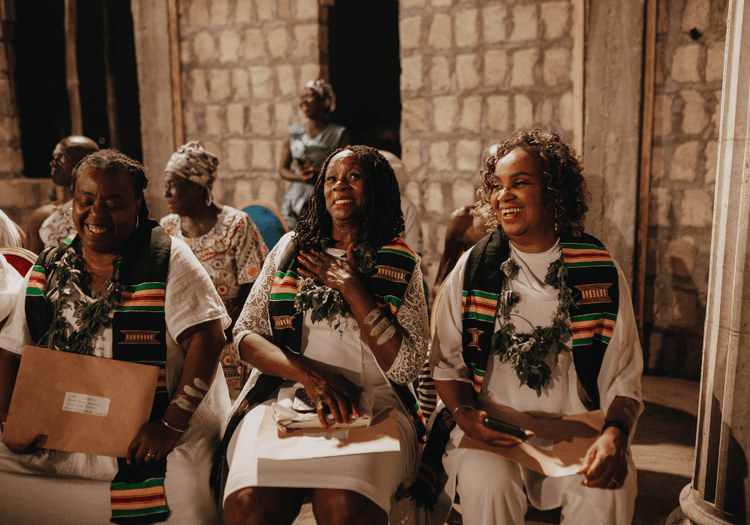
You have the dates in mind. You have the group chat buzzing. Maybe you have already pictured yourself stepping out of the Accra International Airport into that warm Accra air.
Now comes the real question. Do you plan the whole trip yourself, or travel with a team that knows the way?
Both are good choices. Thousands of people with ties to West Africa have done it each way, and loved it. The right answer depends on what you want your time here to feel like.
This guide walks you through the differences, from the point of view of a Ghanaian local guide. We also want you to land in Ghana feeling confident, no matter which way you go.
Let's get into it.
Which African Diaspora Trips Work?
If you want the plan handled, local doors opened, and a warm circle around you from day one, an organized trip is hard to beat. If you love the thrill of figuring things out and you have time to spare, independent travel can be wonderful too.
Here is the quick side-by-side:
1. Planning
Organized Diaspora Trip: Done for you. Every piece of the trip is planned.
Independent Travel: You handle all the planning and logistics yourself.
2. Getting Around
Organized Diaspora Trip: Transport is pre-arranged for the group.
Independent Travel: You navigate using ride-hailing apps, local taxis, or private hired drivers.
3. Local Access
Organized Diaspora Trip: Dedicated hosts open doors, share local stories, and offer insider access.
Independent Travel: You build local connections and discover experiences as you go.
4. Pace
Organized Diaspora Trip: Follows a set rhythm designed around key highlights and scheduled moments.
Independent Travel: Completely flexible. You set your own itinerary and speed.
5. Company
Organized Diaspora Trip: Travel alongside a small, shared circle of fellow travelers.
Independent Travel: Travel solo or strictly with your chosen group.
6. Best For
Organized Diaspora Trip: First-time visitors, short stays, and families looking for ease and structure.
Independent Travel: Return visitors, longer stays, and confident planners who want total control.
What Each Way of Traveling to Ghana Feels Like
An organized trip to Ghana
Picture this. You arrive, and someone is there to welcome you. You ride to your stay with new friends who feel like old ones by the end of the week. The next morning, you are at a market with a local Host who greets every vendor by name, and by lunch you are eating something you cannot pronounce but will never forget.
An organized trip is built around moments like these. Someone has already thought about the timing, the stops, and the stories so that you can be present.
For many returnees, that matters. Traveling to Ghana, especially if it is your first time, can carry big feelings. It helps to share them with people who understand.
Independent travel to Ghana
Now picture the other way. You pick your own neighbourhood. You wander into a chop bar because the smell was too good to pass. You change your plans on a whim because a new friend invited you to a gathering on the other side of the city.
That freedom is real, and some people love it. You set the pace, you choose every stop, and you can stay as long as you like.
It also asks more of you. You are the planner, the navigator, the problem-solver, and the translator of local customs, all at once. That can be exciting. It can also be tiring when you are jet-lagged.
Now let's look at each part more closely.
1. Time, Planning, and Logistics for your Ghana Trip
This is where the two options differ most.
What independent travel involves
If you go on your own, you will handle a good number of details yourself. Here are the main ones.
Entry requirements. Ghana introduced an e-Visa platform on 25 May 2026 for tourists and business travelers, and complete applications are expected to receive a decision within 48 hours. Requirements depend on your passport, so check the official Ghana e-Visa portal before you travel.
Health documents. Visitors need a valid yellow fever certificate, issued at least 10 days before arrival. Rules can change, so confirm the current requirement with the official sources before you fly.
Getting around. Ride-hailing apps such as Uber, Bolt and Yango are popular in Accra. Taxis are easy to find, but most do not use meters, so you agree on the fare before you get in.
Money. The same guide says cash is still widely used, and that ATMs can have withdrawal limits and fees. It also notes that ATMs are more likely to accept Visa than Mastercard. Carry some cedis and a backup card.
Day trips. The big heritage stops are outside Accra. Cape Coast Castle is about a four-hour drive from Accra, the capital, and Elmina Castle is roughly three and a half hours away from Accra. Our day tours from Accra run anywhere from eight to fifteen hours. Plan for a long, full day.
None of this is hard. It is simply a lot of small decisions, and they add up.
What an organized trip takes off your plate
On an organised trip, we handle those pieces for you. Transport, timing, entry to sites and the order of the day are all planned. You still have room to breathe, and you can say "let's stay a little longer" at a place you love.
For a short visit, that saved time can be the difference between seeing a handful of places and really experiencing them.
2. Safety and Comfort
Ghana is warm and welcoming, and most visitors have a lovely time. Still, being in a new place without local knowledge can feel like a lot. This is where having Hosts really counts.
At Protour Africa, our hosts are local. They know which routes avoid the worst traffic, which spots are worth the trip, and which to skip. They know when to arrive so that you are not waiting in the sun.
They also know the small things. For instance, greetings matter in Ghana, and visitors are mostly expected to greet people before getting into conversation. It is the kind of detail that is easy to miss on your own and easy to learn beside someone who lives it every day.
3. Local access & Heritage sites
Some of the best moments in Ghana come through people, not places. A Host can introduce you to a family-run kitchen, a drummer, a fabric seller, or a friend of a friend who becomes part of your story.
As an independent traveler, you can absolutely find these moments too. It usually takes more time and a few awkward first conversations. That is part of the adventure, if you have the days for it.
Several of the most meaningful places on a heritage trip are easier with a knowledgeable companion. Having a Host with you means you can ask questions, take a quiet moment, and process what you are feeling at your own pace, with someone who gets it.
4. Cost and Value
It is natural to compare prices, so here is a fair way to think about it.
Independent travel can look cheaper on paper, because you only pay for what you choose. But the costs add up in less obvious ways. You pay for rides between each stop. You pay entrance fees separately. And your time has value too, especially if you only have a week or two.
An organized trip bundles those pieces together. What you get is peace of mind, a tested rhythm, and the shared experience of travelling in a small group.
A tip for comparing fairly: write down everything you would need to arrange on your own, then see what is included in the organised option. That gives you a true side-by-side.
Entrance fees to national museums and castles are set by the Ghana Museums and Monuments Board, and the fees are reviewed from time to time. Always check the official fees page for the current amounts.
5. Who Each Option Suits Best
An organized trip may be right for you if:
This is your first visit to Ghana.
You have a limited number of days and want to make the most of them.
You are travelling with family, including older relatives or children.
You would like to share the experience with a small, friendly circle.
You want stories and context alongside the sights.
You would rather spend your energy enjoying the trip than planning it.
Independent travel may be right for you if:
You have visited Ghana before and know the lay of the land.
You are staying for several weeks or longer.
You love building your own plan and changing it as you go.
You already have friends or family in Ghana who can show you around.
You are comfortable negotiating, navigating, and asking for help.
Read more about how Diasporans Can Explore African Ancestry in Ghana
Bonus Tips for Ghana Diaspora Travelers
When people compare these two options, a few worries come up again and again. Let's address them.
"I do not want to feel like a tourist": You will not. Small, intimate groups and local Hosts are designed to put you in real places with real people. Visiting with a Host often feels closer to being a guest of the family than a visitor on a schedule.
"I want freedom": You can have it. Even on an organised trip, it is worth asking for open afternoons, free evenings or a day to explore. Time to wander is part of a good trip.
"I am worried about it being too emotional": You will laugh more than you cry. There is incredible food, music, and warmth, and when the heritage moments come, you will not be alone. If you are travelling independently, consider visiting heritage sites with a Host, a friend, or fellow returnees so you have someone to share the moment with.
"I am not sure I am ready": You do not need to be ready. You just need to come. Ghana will do the rest.
A Blend Often Works Best
You do not have to choose only one. Many returnees start with an organised trip to get their bearings, then come back and explore on their own. Others plan a few days of independent time before or after a guided stretch, so they get both structure and freedom.
If you are not sure, start with the part that feels most daunting. If heritage sites feel emotionally big, go with a Host. If you are an experienced traveller who loves a free afternoon, keep that time open.
Conclusion
At Protour Africa, we built The Path for people who want to experience Ghana with warmth and ease. It is our signature experience, designed around small, intimate groups, local hosts, and time to enjoy each moment.
You will eat well, laugh a lot, and see places that stay with you. And while you are here, you will come home to a circle of people who feel like family.
If you would like to see how our journeys could fit your plans, we would love to talk. Come and explore it with us whenever you are ready.
You belong here.
Get in touch with Protour Africa and let's start the conversation
Please note: Entry requirements, health documents, and fees can change. Always confirm the latest details with official Ghanaian sources before you travel.
FAQs
Is it safe to travel independently in Ghana?
Many visitors travel on their own and have a great time. As in any city, it helps to use trusted ride-hailing apps or agree on taxi fares first, keep valuables out of sight, and ask locals for advice. If you would rather have company and local knowledge, an organised trip adds a layer of ease.
How long should I plan for a first trip?
Many first-timers find that about a week to ten days lets them enjoy Accra and take at least one heritage day trip without rushing. Because the major castles on the coast are a long drive from Accra, a bit of extra time helps you enjoy them properly.
Do I need a guide at the heritage sites?
For some sites, yes. Most slave castle visits are guided. A host or on-site guide shares the history and answers your questions, which makes the visit richer.
What is the best time of year to visit Ghana?
Ghana welcomes visitors all year round. December is a big season for returnees, with families gathering and celebrations across Accra, so you will feel the energy then. If you prefer a calmer pace, other months may suit you well. Choose what fits your life.
Can I bring family members of different ages?
Yes. Organized trips can be shaped around the group, with a comfortable pace and transport arranged ahead of time. For independent travel, plan extra time between stops, since drives can be long.
How much of Ghana will I see on an organised trip?
That depends on the experience you choose. Our trips focus on depth, not on rushing through as many stops as possible. You will see Accra, enjoy the food and music, and visit key heritage sites with time to take it all in.
What should I pack?
Light, breathable clothing, comfortable walking shoes, sun protection, and a small bag for daily essentials. Bring some cash, a backup card and copies of your documents. If you are visiting heritage sites, plan modest, comfortable outfits.
Can I start with an organised trip and explore alone later?
Absolutely. Many of our Family members do exactly that. A first trip gives you confidence, contacts, and a feel for the country, and you can then return with your own plan.

Date-Jul 2026 & Jul 2027 Number of days-10 days
This tour is curated for guests seeking the deep continuity of their Pan-African heritage. Rather than beginning with the immediate emotional weight of the coastal dungeons, this journey starts at the northern trade routes, where it all began. Follow with participation in the PANAFEST festival and conclude with the natural majesty of the Volta Region of Ghana.