Tracing African Ancestry in Ghana for Diasporans
The journey to explore ancestry in Ghana, especially for those tracing African ancestry in Ghana, is something far deeper than a scheduled itinerary and a list of sites. It is a return. A reconnection. A quiet conversation between you and a history that has been waiting for you to come back and hear it.
As a local guide, I have walked this path with many African Americans and diasporans. I have seen the moment when curiosity turns into clarity. When emotion turns into understanding. When Ghana starts to feel like something you have always known, something personal, ancestral, and true.
In this blog post, we discover what it means to explore African ancestry in Ghana since the Ghana Year of Return was launched in 2019. Why does this place, out of all others, hold such a profound connection for so many in the diaspora? And what can you expect when you choose to make the journey?
Why Ghana Is a Powerful Destination for Ancestral Discovery
There is a profound reason Ghana feels different from any other destination. It is not simply the weight of history. It is the power of recognition and the silent memories held within the land itself.
As one of the central departure points of the transatlantic slave trade, Ghana's coastline and its castles serve as a bridge between the past and the present. They offer a sense of familiarity that is often difficult to explain but impossible to ignore. Something in the soil, in the air, in the rhythm of the place reaches into the body and says: you have been here before. Not you personally. Your lineage.
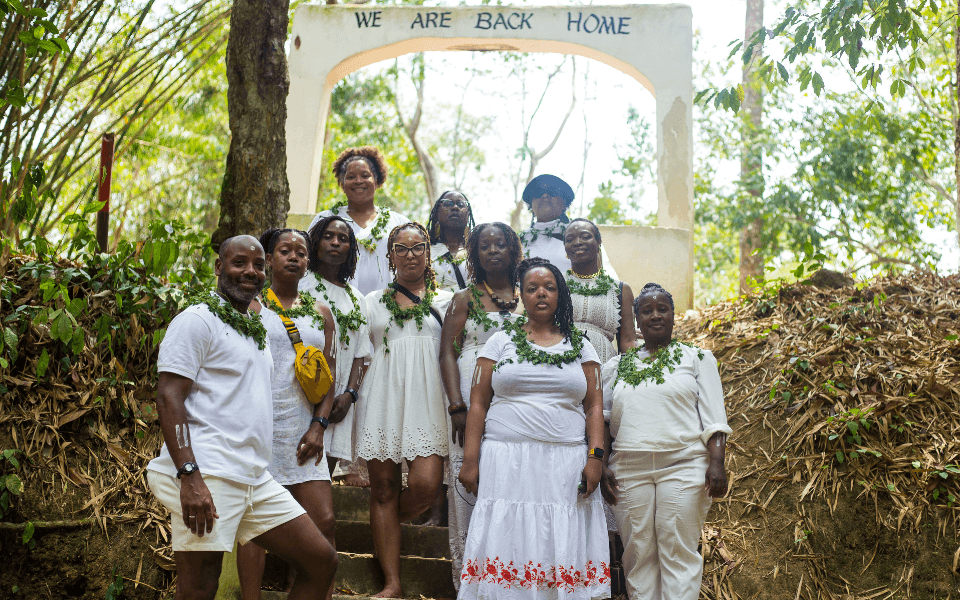
Since the Year of Return Ghana often called year of return initiative was launched in 2019 by the former President Nana Akufo-Addo, this movement has opened a door that grows wider with every passing year. What began as a landmark invitation, welcoming the global diaspora to reconnect with the continent has evolved into something far more enduring than a single year's campaign. It has become a living homecoming. A permanent declaration that the diaspora is not a visitor here. It is family.
The Year of Return Ghana changed not only how many diasporans relate to the continent, but how Ghana itself formally welcomed them. In ceremony, in policy, in community, and in spirit. That welcome has not dimmed. If anything, it has deepened.
What makes Ghana powerful for ancestral discovery:
A country that has intentionally and formally welcomed the diaspora back --- not as tourists, but as family returning home
Living traditions that connect the past to the present in ways that are felt, not merely observed
Communities that see and receive you as family, not as a visitor passing through
A cultural rhythm that often feels as though it was already inside you --- long before you ever boarded the plane
Heritage Journeys in Ghana
A meaningful heritage journey in Ghana requires more than a checklist of historical landmarks. It demands an intentional approach which prioritises depth over distance, and meaning over movement. While many operators focus on the physical sites, the most transformative experiences are those that guide people through the layers of meaning beneath the surface.
The journeys I guide balance emotional reflection with active cultural immersion. Through storytelling at pivotal sites, conversations with local historians and community elders, the experience moves beyond sightseeing. It creates the conditions for personal reconnection. For the dots between history, culture, and identity to finally connect.
In Accra (Ghana's capital city), this approach leads beyond the typical routes and into the heart of the city's markets, artisan workshops, and living neighborhoods. Spaces where centuries of tradition continue to breathe inside the modern world. When timed with significant events like PANAFEST, the journey becomes a powerful encounter with resilience and communal memory. You do not watch Ghana's story from a distance. You step inside it.
Explore our curated ancestral reconnection experiences at Protour Africa
What to Expect When You Visit Ghana's Ancestral Slave Sites
Before you arrive at the castles, it is important to understand what the experience does not just what it shows. Because this part of the journey is powerful. And it stays with you.
Slave Castles: Understanding the System
When you arrive at Cape Coast Castle, you walk beside a local site guide through its corridors and its dungeons. You will hear the stories. You will stand before the Door of No Return. You may feel anger. Grief. Silence. Awe. All of it is valid. All of it is welcome.
At Elmina, we go deeper into the origins of the trade; how it began, how it expanded, and the full, unedited truth of what happened within these walls. But more importantly, I help you see the resilience of those who endured it. Because this journey is not only about pain. It is about the extraordinary strength of people who refused, even in chains, to be erased.
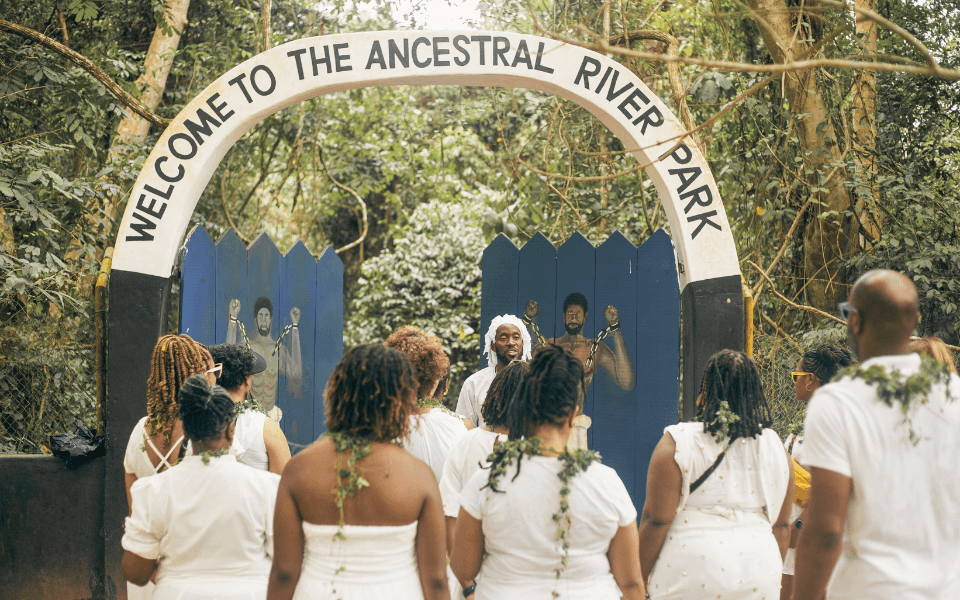
A Sacred Stop: Assin Manso Ancestral Slave River Park
At Assin Manso, you are standing at one of the last places your ancestors touched before they were taken. This site has a sacred river where slaves had their last bath and were rebranded before they went into the castles. Travelers usually take a moment here to reflect, to pray, to release something they have been carrying for a long time. We do not rush this stop. We hold the space for whatever needs to arise. You will get to touch the river and feel the present energy of our ancestors.
Genealogy in Ghana: What Is Possible and What Is Not
I always approach this part of the journey with honesty, because your expectations matter and you deserve the truth.
Genealogy in Ghana is different from what you may be used to in the West. Written records are limited, and the disruption caused by the slave trade means exact lineage tracing is often not possible. But that does not mean your journey lacks depth. It means the depth lives somewhere other than in documents.
What You Can Discover
Connections to specific ethnic groups such as the Akan or Ewe peoples
Cultural traditions that reflect and illuminate your ancestral heritage
Historical context that brings your personal story into sharper focus
Personal connections through lived, embodied experiences that no archive can replicate
What You May Not Find
Exact names or written records of enslaved ancestors
Complete family trees extending back through pre-colonial periods
Formal documentation of the kind Western genealogical research produces
Practical Tips for Planning Your Ancestral Journey
Embarking on a heritage journey to Ghana is a profound undertaking. One that calls for a different kind of preparation than any holiday or leisure trip you may have taken before. To ensure the experience is as transformative as possible, carry these essentials with you from the very beginning.
Prepare Emotionally
This journey can be deeply intense, particularly when you are standing in spaces that hold the full, unedited weight of history. Give yourself permission to feel whatever arises. Grief, anger, wonder, love, relief. None of it is wrong. All of it is part of the work.
Travel With Intention
Approach this return as a pilgrimage rather than a holiday. Arriving with curiosity, openness, and genuine respect for the land and its people allows for connections that go far deeper than those a standard itinerary produces.
Prioritise Meaningful Depth
The right guidance can transform this journey from an information-gathering experience into a life-defining milestone. Seek out experiences that centre storytelling, cultural nuance, and genuine community engagement over a checklist of famous landmarks.
Document the Evolution
Whether through journaling, photography, or voice recordings, preserve the way your perspective shifts throughout the journey. Your immediate emotions and realisations are part of the story. Capture them. They will grow in meaning long after you return home.
Tips for a Seamless Journey When You Arrive in Ghana
Arriving in Ghana for the first time or returning after years of longing can carry a weight of emotion that no amount of preparation fully anticipates. These practical considerations will help ensure that when the journey begins, nothing logistical stands between you and the experience you came for.
Exchange currency before you leave the airport.
Dress with cultural awareness.
Learn a few words of Twi before you arrive.
Protect your health with intention.
Arrive without a fixed agenda for your emotions.
Allow the first day to be a day of arrival, not just physically, but emotionally.
Beyond the Journey: Building a Lasting Connection
A heritage journey to Ghana rarely concludes when the flight departs. For many, the return home is simply the beginning of a lifelong bond. This experience acts as a catalyst --- shifting perspective in ways that continue to resonate long after the journey has ended. While some find themselves returning annually, or exploring pathways toward residency and community investment, the internal transformation is universal.
The journey stops being a list of places visited. It becomes a permanent, living chapter of your personal story. Those who walk away from Ghana with their eyes truly open carry something that deepens with time:
A grounded sense of identity. A clearer understanding of your place within the global African story.
A meaningful anchor. A spiritual and emotional connection to a specific geography that feels, for the first time, like home.
Enduring relationships. Bonds with local communities and fellow travellers that extend far beyond the duration of the experience.
A permanent sense of belonging. The quiet, powerful realisation that you are part of a lineage that spans the Atlantic and that it has been waiting to receive you.
Ultimately, experiencing Ghana through this intentional lens transforms the country from a destination into a vital part of your own history. It is no longer a place on a map. It is a source of strength, a sense of origin, and a feeling of belonging that will shape how you move through the world and your legacy for years to come.
Ghana Year of Return Citizenship Application: Making the Return Permanent
If you are considering the Ghana Year of Return citizenship application, here is how the process works. For some who journey with us, the experience of return does not end at the departure gate. It deepens into a question that many carry long after they arrive home: what would it mean to stay? Ghana has answered that question with a formal, legal pathway.
The most accessible route for people of African descent is the Right of Abode (ROA). It grants indefinite residence, visa-free entry, and the full right to live and work in Ghana without a permit. The application goes to the Minister of the Interior through the Ghana Immigration Service, supported by proof of identity, evidence of African descent, a police clearance certificate, and attestation letters from two Ghanaians of repute.
It is important to understand that the right of Abode is not the same as full citizenship. Voting rights and a Ghanaian passport require naturalization, which becomes possible after several years of legal residence. In November 2024, 524 people from the Black diaspora were granted Ghanaian citizenship in a single ceremony, the largest group since the Year of Return. This is a reminder that this door remains open.
The Ghana Year of Return did not simply invite the diaspora to visit. It extended a permanent welcome, one backed by law, policy, and a nation that has declared, in every meaningful way, that you are family. We always recommend consulting a qualified Ghanaian immigration lawyer before beginning any application, as requirements can change.
Conclusion
Whether you come searching for answers through African ancestry in Ghana, hoping to trace your lineage, or ready to immerse yourself in a heritage journey, what you will find here is greater than information. You will find a connection.
The Year of Return Ghana began in 2019 as an invitation. But the door it opened has never closed. It has only grown wider, welcoming more of the diaspora home with each passing year, building a movement of return that is as much about the future as it is about the past.
If you have been feeling that pull and persistent voice asking you to come back to where the story began I encourage you to listen to it. Because this is not just about discovering where you come from. It is about remembering who you are.
And when you are ready, we will be here to walk beside you every step of the way.